
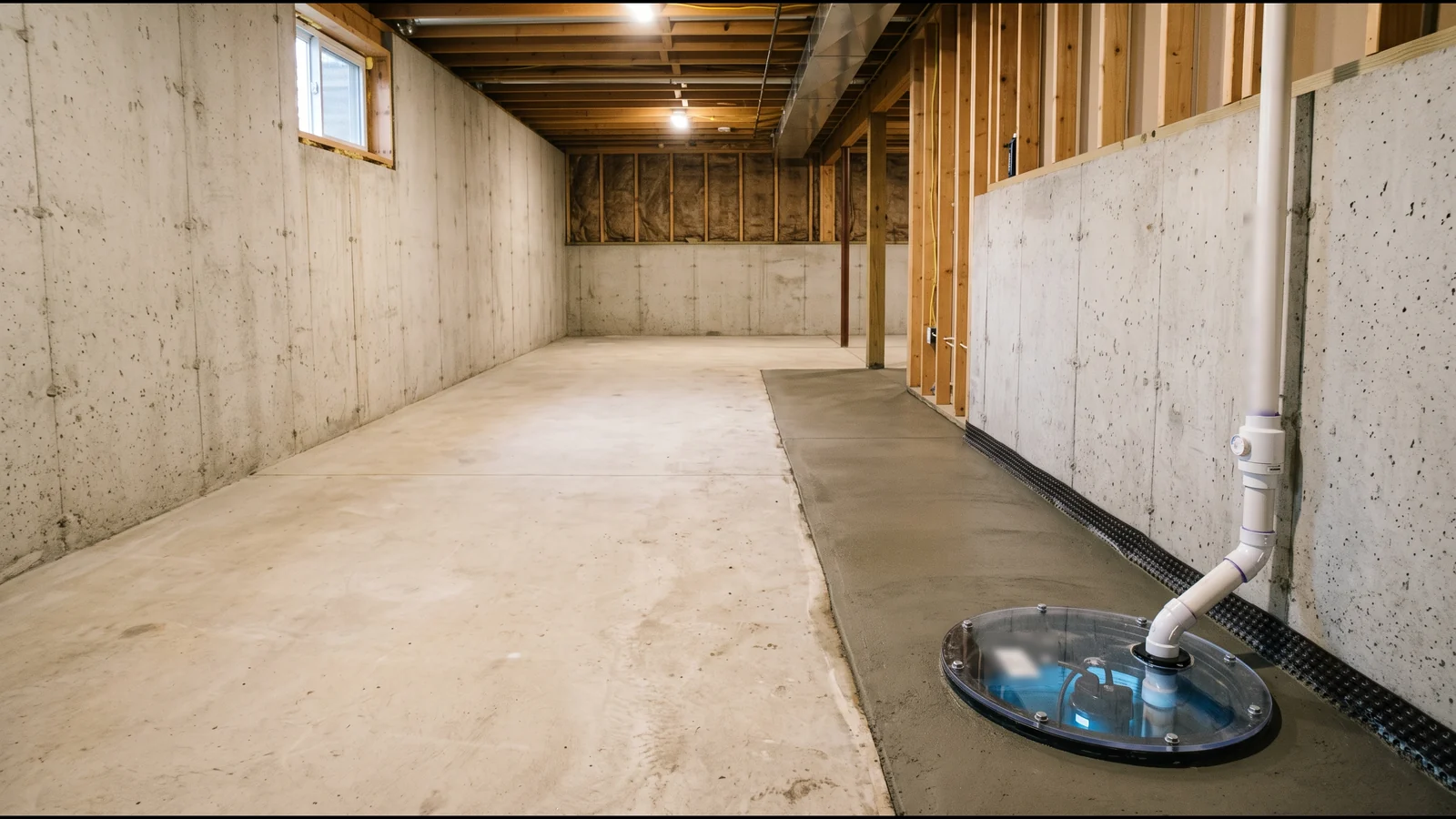
Yard Drainage Solutions
Surface fixes, from the cheapest to the most built. Buried gravel-and-pipe drains for groundwater are a separate job, covered on the French drain installation page.
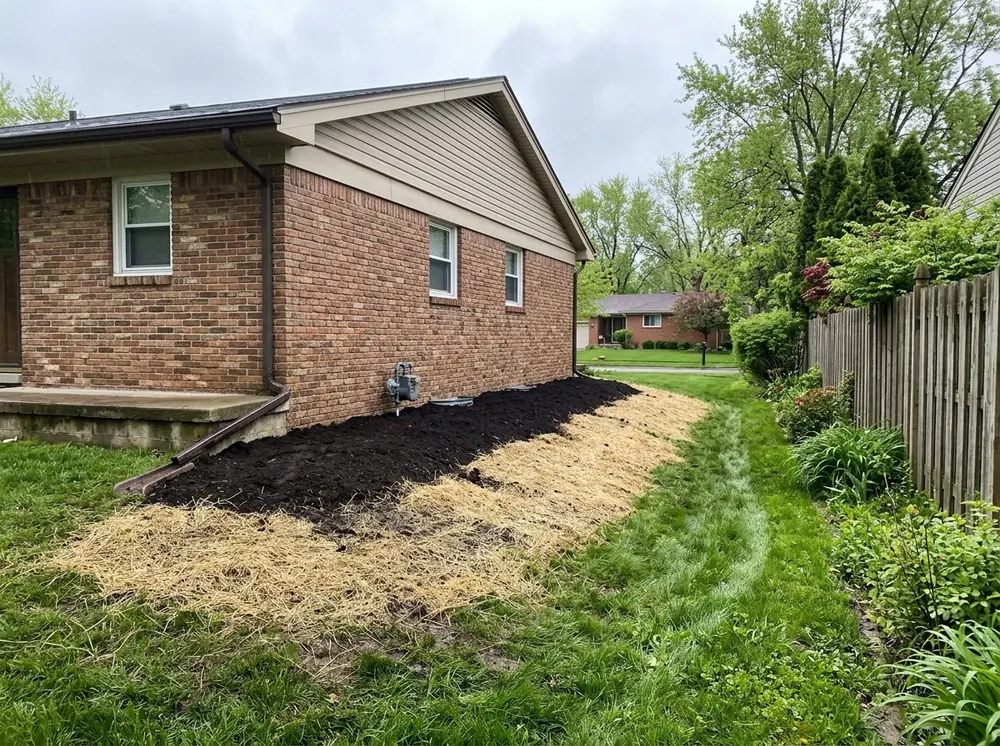
Regrading and Swales
Regrading builds the soil back up against the foundation so it slopes away. The code minimum is a 6-inch drop within 10 feet of the wall. Farmington Hills' ordinance asks for a 5% slope over 10 feet, and where a house sits closer than 10 feet to the lot line, 5/8 inch per foot. That's where swales come in. Code allows a shallow, grassed channel where a fence, a wall or the next house leaves no room for the full slope, and the swale carries water along the side yard to the street or the back of the lot. Fill should be compacted soil with topsoil over it, not mulch heaped against the siding.
Catch Basins and Surface Drains
A catch basin is a box set flush with the ground with a grate on top, connected to solid pipe that carries the water away. The grate catches leaves and debris before they reach the pipe, and it lifts off for cleaning. They go at the low point of a yard, at the bottom of a downspout, or at the foot of a sloped driveway. The pipe needs somewhere to go: the storm system, a ditch, a dry well, or daylight lower on the lot.
Channel (Trench) Drains at Driveways and Patios
A channel drain is a long, narrow trough with a grate, set flush into concrete or pavers. It catches sheets of water across a driveway that slopes toward the garage, or a patio poured flat against the house. Code wants hard surfaces within 10 feet of the foundation sloped at least 2% away from the house, and a patio or walk that has settled toward the house breaks that rule. A channel drain at the edge of the slab is the fix when tearing out and re-pouring isn't in the budget.
Dry Wells
A dry well is a buried chamber or gravel pit that holds runoff and lets it soak into the ground. Clay is the catch here. HomeGuide notes that clay-heavy soils may need extra or larger wells and recommends a percolation test before sizing one, and much of Farmington Hills sits on loam and clay loam glacial till. A dry well should sit about 5 to 6 feet deep to stay below freezing, well away from the foundation. EPA counts stormwater dry wells as Class V injection wells, authorized by rule, with owners expected to file basic inventory information. Plan on cleaning it out once a year, since leaves and silt from the roof and lawn settle in the bottom.
Standing Water in Low Lawn Areas
A patch of lawn that stays soggy for days after rain is a low spot, compacted soil, or groundwater. Low spots are filled and re-seeded or given a catch basin. Compacted soil, common where construction equipment ran, can be aerated and topdressed. If the soil underneath is wet even in dry weather, it's groundwater, and that needs a subsurface drain rather than a surface fix. Water that pools only by the house usually traces back to downspouts; see buried downspout extensions.
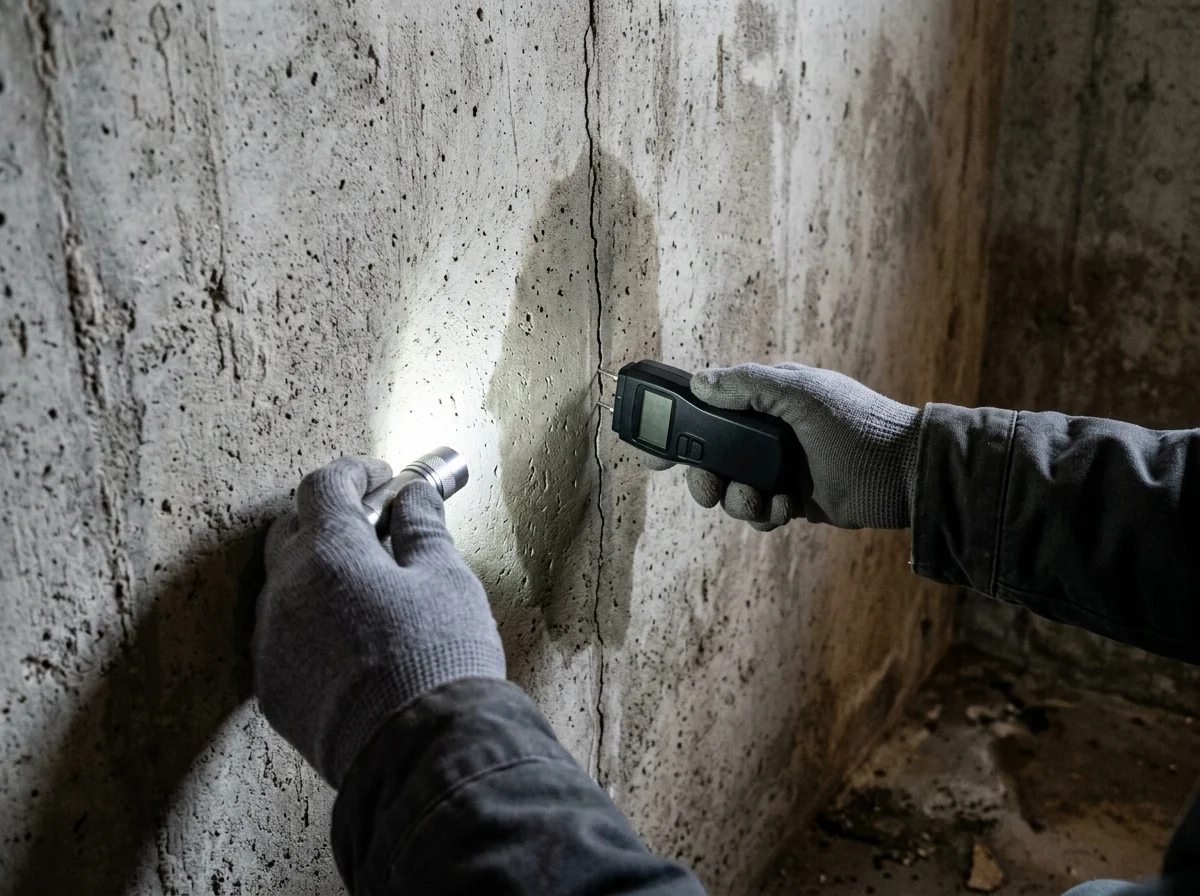
Why Farmington Hills homeowners call Farmington Hills Waterproofing
- Free in-home inspection
- Written scope and price before work starts
- Cause found before a fix is quoted
- One local waterproofing contractor, not a call list
- No charge to homeowners for the referral
Yard Drainage Rules in Farmington Hills
Some of these rules come from the city, not the building code.
Grading changes need a permit
City ordinance says no land's drainage pattern may be changed by filling, cutting or grading before a permit is issued. Ask the Building Division at (248) 871-2450 before a big regrade.Don't block the neighbors' flow
It's unlawful under the same ordinance to impede surface water across private property in a way that differs from the approved grading plan.Michigan's natural flow rule
Under Michigan common law, the higher lot can't increase the amount, intensity or speed of water it sends onto lower lots, and the lower lot can't block water that flows naturally. Point a new swale or outlet at the street or your own back yard, not at the house next door.Sump water has its own rules
The storm sewer is one legal outlet for footing drain water. The other is the lawn, with the outlet at least 4 feet from the house, the water kept on your own lot and clear of the street right-of-way by 20 feet.Work by the street needs a city permit
Anything built inside a city road right-of-way, such as a pipe to the curb or a culvert, needs a right-of-way permit from the DPS Engineering Division (248-871-2560).Call MISS DIG
Place a free MISS DIG 811 ticket three or more business days before anyone digs.
Yard Drainage Cost
National ranges from HomeGuide. We haven't found Michigan-only figures.
| Job | National range | HomeGuide date |
|---|---|---|
| Fix grading around a house | $500-$3,000 | Jan 2026 |
| Swale | $250-$1,000 ($5-$15 per foot) | Feb 2026 |
| Yard drainage system (inlets and pipe) | $1,200-$8,000 ($8-$15 per foot) | Feb 2026 |
| Plastic catch basin, materials | $20-$130 each | Feb 2026 |
| Channel drain | $30-$150 per foot; driveway $400-$2,400 | Feb 2026 |
| Dry well | $300-$1,500; $1,200-$5,200 for 250-500 gallons | Feb 2026 / Dec 2025 |
The order we'd follow is grading first, then downspouts, then built drains. On a lot that already slopes the right way, the first two often solve it.