
Basement Leak Repair Services
Five common leak points, and what a targeted repair looks like for each. If water comes in along several walls at once, it's past spot repairs, and the interior basement waterproofing page is the one to read.
Cove Joint Seepage Repair
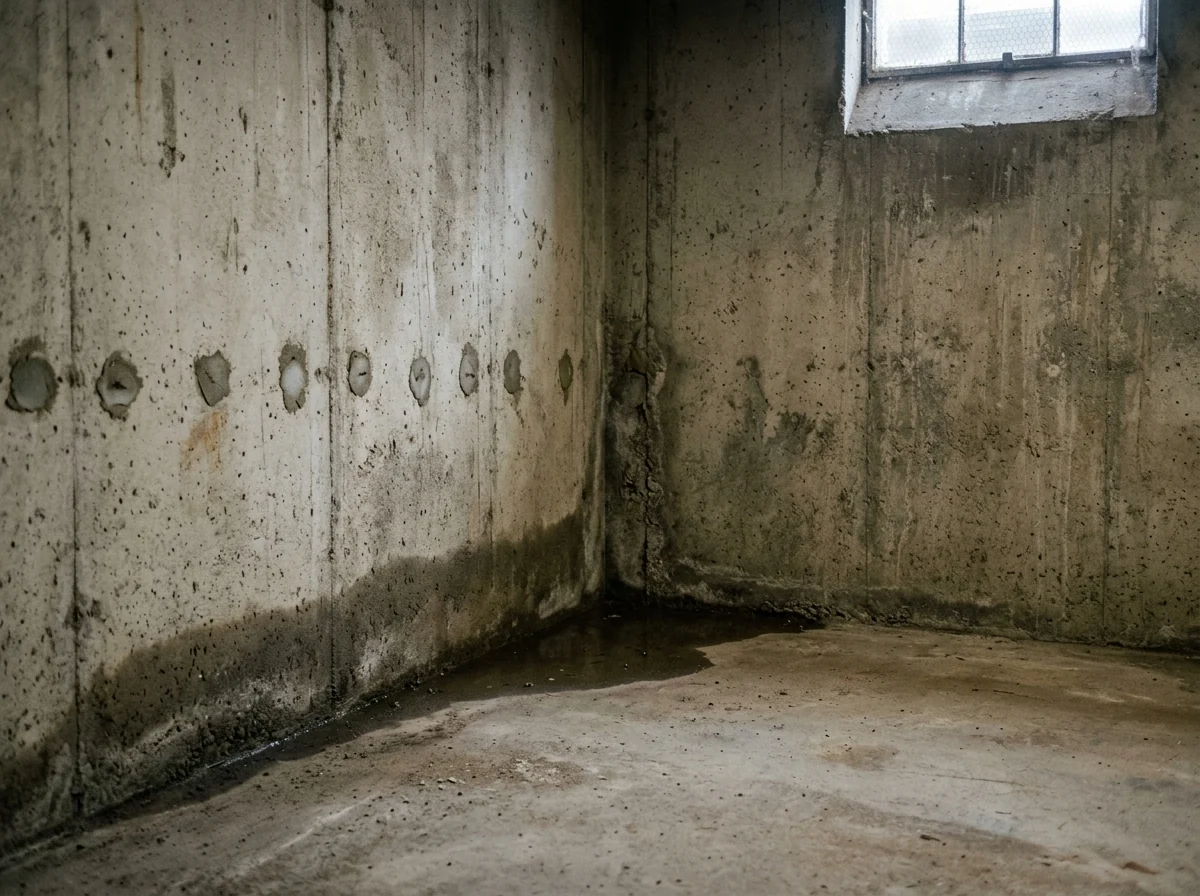
Water at the cove joint shows up as a dark line or a thin sheet along the base of the wall after rain, often on one wall more than the others. Wall and slab are separate pours, which leaves a seam with nothing to resist water pressure; caulk or hydraulic cement pressed into it rarely lasts. For a short run on one wall, a contractor may inject the joint or fix the grading and downspouts on that side and watch it through the next wet spell. A long run that keeps coming back means pressure under the slab, which takes drain tile to relieve.
Tie-Rod Hole Leaks
Poured walls are cast between forms held together with metal ties. Where the ends were snapped off, a small hole was left, patched or not. The giveaway is a row of wet spots or rust streaks at the same height, a couple of feet apart, around the basement. They aren't structural. Each hole is drilled out and injected with polyurethane, which reacts with water and swells to fill the hole, or plugged with a hydraulic cement patch where the hole is dry.
Basement Window Leaks
When water comes in at a basement window, the window itself often isn't the cause. The well outside fills like a bucket, and the water finds the gaps around the frame. Code expects window wells to drain, normally into the foundation drain. Look for a well drain clogged with leaves and silt, a well floor of packed soil instead of gravel, or a well that has sunk below the window sill. The repair is often to clear or add the drain and re-seal the frame. A cover keeps rain and leaves out of the well. If the well itself is rusted through, too shallow or pulling away from the wall, it needs replacing; see window well installation.
Pipe and Utility Penetrations
Water lines, gas pipes, electrical conduit and old oil-fill pipes pass through the wall in holes cut a bit larger than the pipe. The packing around them dries out, and a plumber replacing a line later may never re-seal the gap. The leak shows as a wet streak below the pipe. From inside, the gap is cleaned out and filled with expanding polyurethane or an injection resin. Where the hole is large or the wall around it is cracked, it's treated like a crack, with injection ports and resin. We'd rather pay for that than for another bead of caulk smeared over the gap from inside.
Leaks Behind Finished Walls
In a finished basement, a leak often shows up first as swollen baseboard, stained carpet tack strip or a musty smell before anyone sees water. The contractor needs the wall open at the leak, usually the bottom foot or two of drywall, to find the entry point. EPA says wet materials dried within 24 to 48 hours usually won't grow mold, so that clock starts when you find the water. Oakland County Emergency Management recommends cutting basement drywall half an inch to an inch above the floor so it doesn't wick water. Re-finishing the wall afterward takes a Farmington Hills building permit for basement finishing.
Why Farmington Hills homeowners call Farmington Hills Waterproofing
- Free in-home inspection
- Written scope and price before work starts
- Cause found before a fix is quoted
- One local waterproofing contractor, not a call list
- No charge to homeowners for the referral
Finding Where a Basement Leak Starts
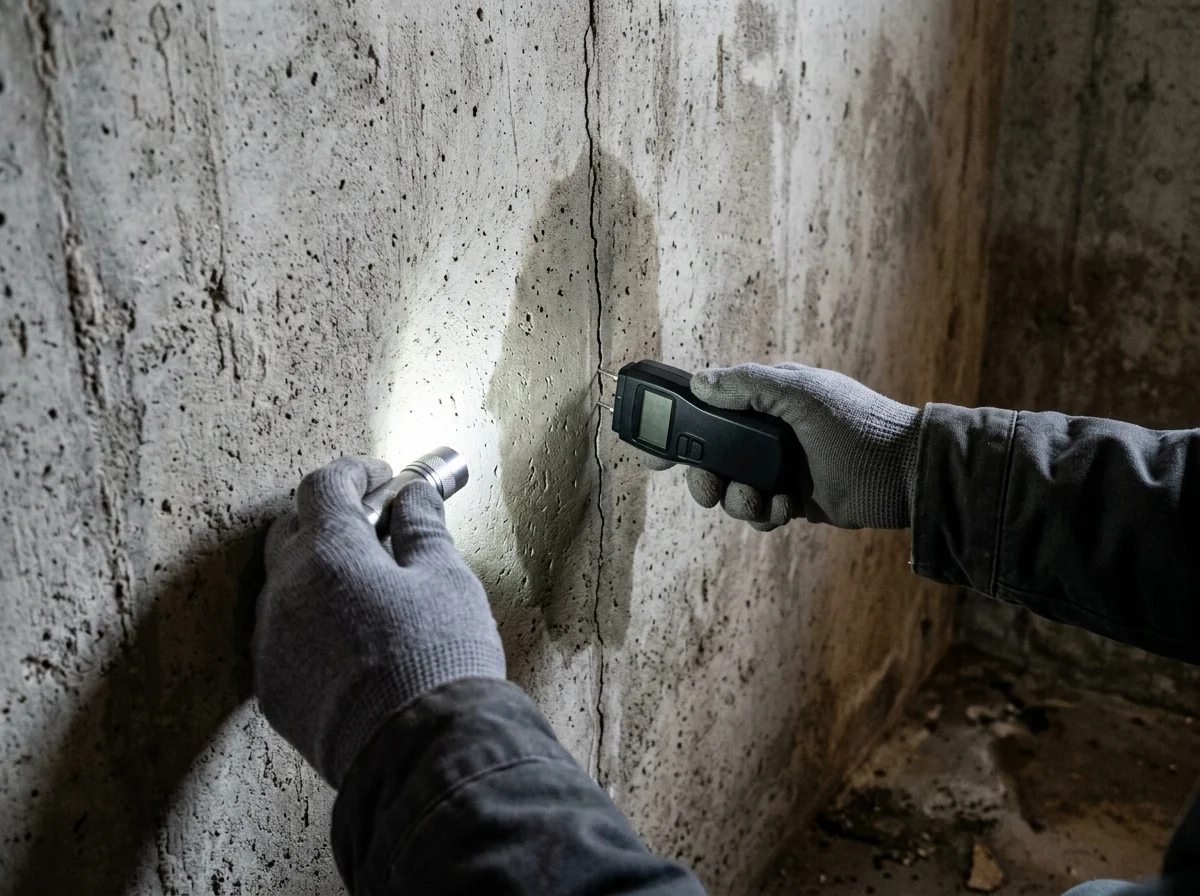
The fix depends on finding the entry point, so a few observations before the inspection help.
After rain, or all the time?
Water that follows storms is coming through the soil. Water present in dry weather could be a plumbing leak or condensation.Sweating pipes and walls
University of Minnesota Extension notes that moisture from laundry, showers and humid summer air condenses on cool surfaces such as pipes, lower walls and floor edges, and that can look like a leak.At one height
A row of spots at the same height on a poured wall points to tie-rod holes.A single line
Water following a diagonal or vertical line is a crack; see foundation crack repair.Under a window or pipe
A streak that starts below a window or a pipe usually means the leak is at that opening, not in the wall.Up through the floor drain
That's a sewer backup, not groundwater, and a plumbing job.
Basement Leak Repair Cost
HomeGuide's national guide (February 2026) puts sealing a minor crack at $250 to $800 or more per crack, and a full interior waterproofing system at $4,500 to $10,000. We haven't found a separate national price for plugging tie-rod holes or sealing a pipe penetration, so ask for the quote per hole or per opening. Block walls usually cost more than poured ones because water can enter at every mortar joint and block, not one seam. HomeGuide adds $75 to $1,000 or more for permits where the work needs one, and re-finishing drywall is extra. We haven't found Michigan-only figures.
If the contractor is quoting injections on three walls, or the same cove joint keeps coming back after it's been sealed, compare the total against a perimeter drain on that wall before you sign.