
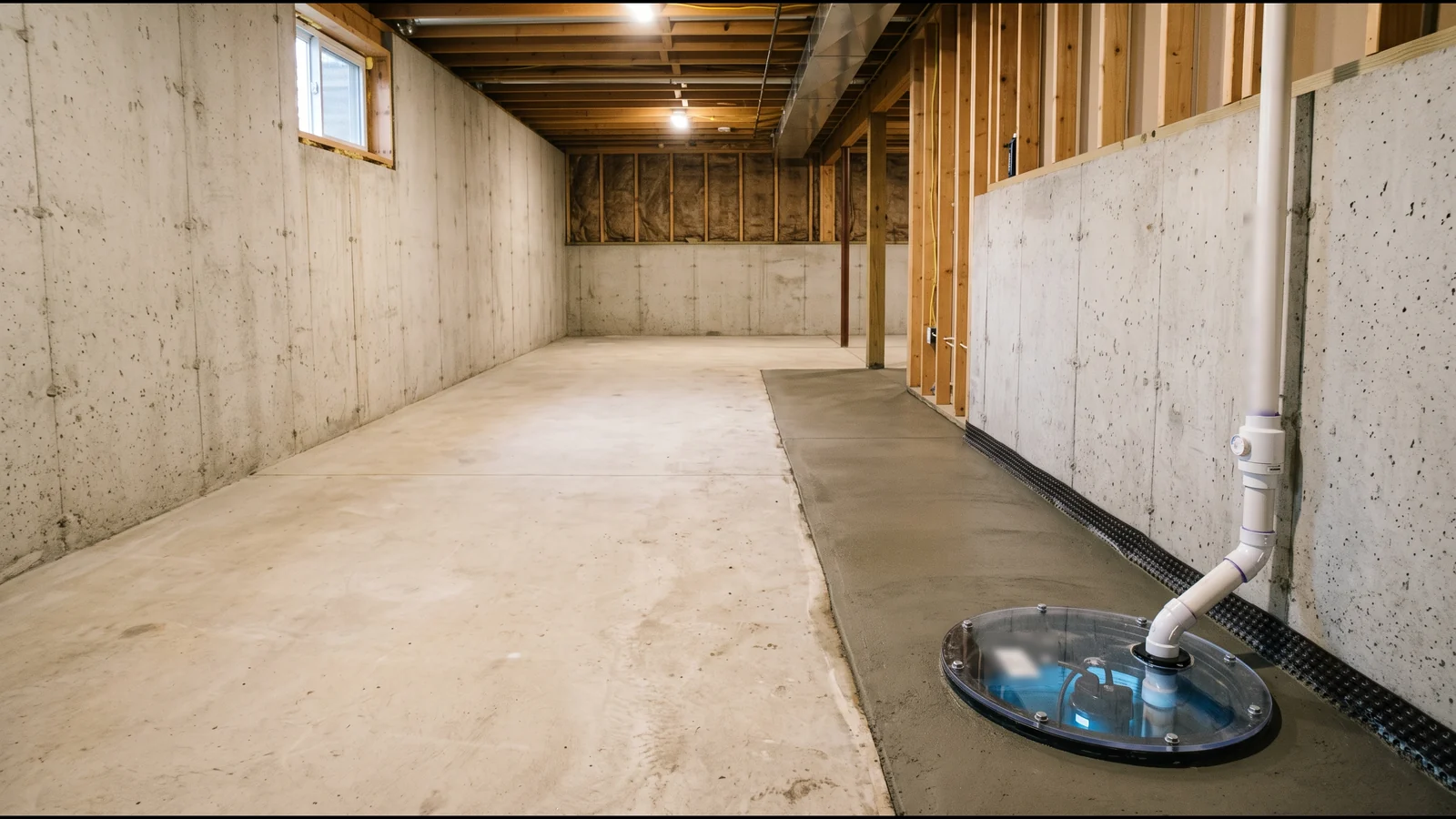
Backup Sump Pump Systems
A backup doesn't replace a sound primary pump. It covers the two ways a primary fails: no power, or a pump that quits. Primary pump sizing and pit work are on the sump pump installation page.
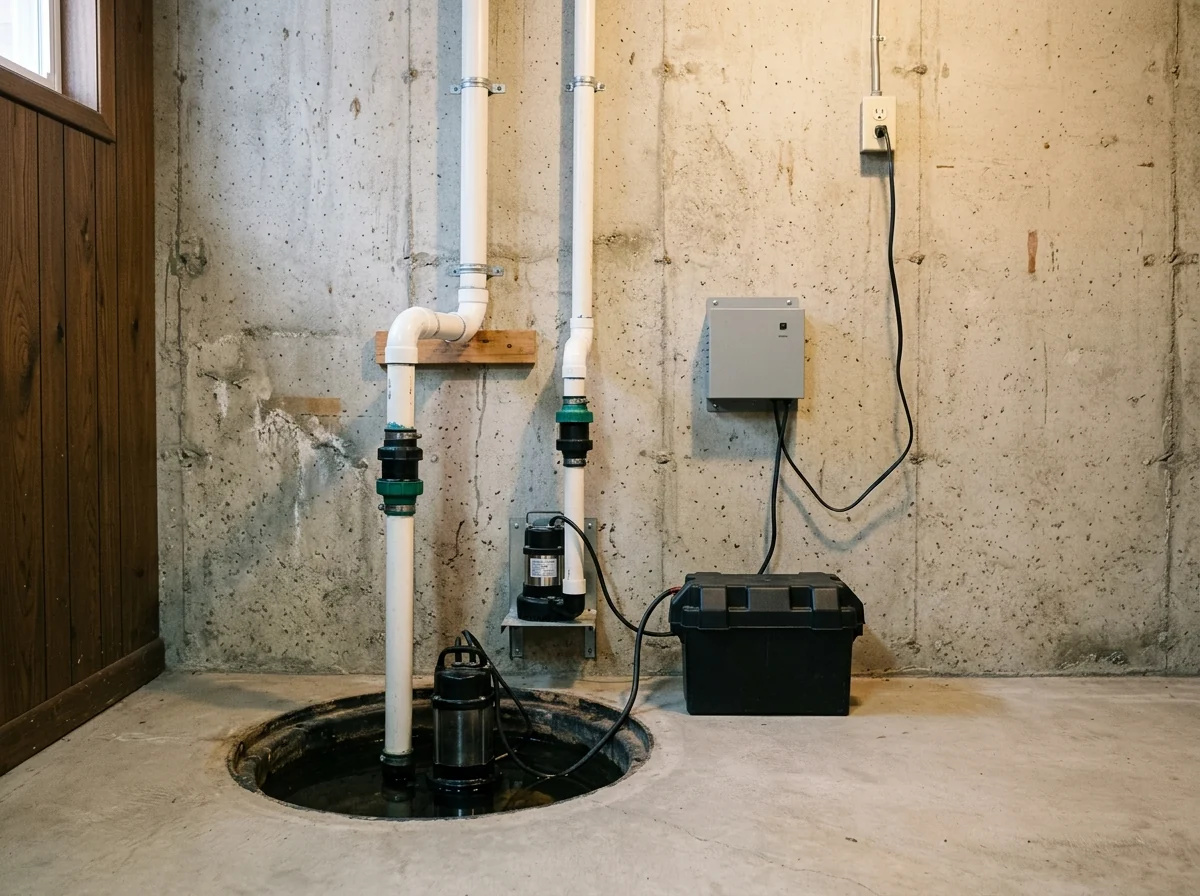
Battery Backup Pumps (AGM vs Wet-Cell Batteries)
A battery backup is a DC pump, a charger that keeps the battery topped up, and the battery itself. In our view the battery choice matters more than the pump. In HomeGuide's figures a flooded (wet-cell) deep-cycle battery costs $100 to $200 and lasts 3 to 5 years, but it needs its water level checked and has to vent the gas it gives off while charging. An AGM battery costs $200 to $400 and lasts 4 to 7 years. It's sealed and needs no topping up. Gel batteries last about as long as AGM but charge more slowly. For a pit in a finished basement, we'd lean toward AGM.
Water-Powered Backup Pumps
A water-powered backup has no battery. City water flows through a venturi and pulls sump water out with it, using about a gallon of city water for every two gallons it removes. It needs at least 30 psi of supply pressure, so it won't work on a private well, and in Michigan it needs a reduced-pressure (RPZ) backflow preventer so pit water can't get into the drinking water. The upside is that it keeps going as long as the city water is on. The downsides are the water bill, the RPZ, and a plumbing permit.
Combination Primary and Backup Systems
A combination unit puts the primary pump, the battery pump and a shared controller on one preassembled discharge assembly. They suit a pit where the old pump is due anyway, or a narrow basin where two separate pumps and floats would crowd each other. The catch is that if the shared discharge pipe or check valve fails, both pumps lose their way out.
High-Water Alarms and Wi-Fi Monitoring
A high-water alarm is a float set above both pumps' start points that sounds when water reaches it. It's the cheapest part of the system, and the one that tells you something is wrong before the floor is wet. Put it where someone will hear it from the bedrooms, or pick a model with a remote horn. Many battery controllers also warn when the battery is low or the backup has run. Wi-Fi models send the alert to your phone, which matters most when you're away from home in a storm, or in a rental where nobody goes downstairs.
Generator and Inverter Backup
A standby or portable generator can run the primary pump through a long outage, and an inverter on a battery bank can do the same, for as long as the bank holds out, without a second pump. How the generator connects to the house is electrical work for an electrician, and the generator itself has to run outside. CDC's rule: never in the house, garage or carport, and at least 20 feet from doors, windows and vents.
Why Farmington Hills homeowners call Farmington Hills Waterproofing
- Free in-home inspection
- Written scope and price before work starts
- Cause found before a fix is quoted
- One local waterproofing contractor, not a call list
- No charge to homeowners for the referral
Battery Backup Sump Pump Cost
National installed prices from HomeGuide (July 2025). We haven't found Michigan figures.
| System | National range |
|---|---|
| Battery-powered backup, installed | $600-$2,000+ |
| Water-powered backup, installed | $300-$1,000 |
| Combination primary + backup | $1,000-$3,000 |
| Replacement battery (wet-cell / AGM) | $100-$200 / $200-$400 |
| Labor share (2-4+ hours) | $150-$600+ |
| Permits and inspections | $50-$200 |
The battery is often sold separately ($100 to $400 in that breakdown), and fittings, discharge pipe and a check valve add $50 to $200. A water-powered unit in Michigan carries the RPZ device on top of that price. Farmington Hills lists sump pumps under both plumbing and electrical permits, so ask whose name goes on them.
How Long a Backup Runs and How to Keep It Ready
Run time depends on the battery and on how often the pit fills. HomeGuide's example: a typical 40 amp-hour battery can run a backup up to 53 hours if the pump cycles once every five minutes. In a heavy storm with the pit filling every minute, it's a fraction of that. Storms are when a backup earns its keep. The August 11, 2014 storm dropped 4 to 6.5 inches on parts of Oakland, Wayne and Macomb counties, most of it inside four hours.
Test it
Unplug the primary pump, fill the pit with a bucket or hose, and watch the backup start and empty it. Plug the primary back in.Watch the battery date
Write the install date on the case. Plan on 3 to 5 years for wet-cell and 4 to 7 for AGM.Top up wet cells
Check the water level in each cell on the schedule in the manual.Keep the discharge separate or checked
Where the two pumps share a discharge, each needs a check valve so one pump can't push water back through the other. A separate line through the wall avoids that, but it has to end where the city allows sump water: the storm sewer, or the ground at least 4 feet from the foundation.Check your policy
Most homeowners policies don't cover sump pump overflow without a separate endorsement, and that's true whether or not you have a backup.
If your primary pump is the part that's acting up, start with sump pump repair.