
Sump Pump Installation and Replacement Services
Submersible Sump Pumps: Cast Iron or Thermoplastic
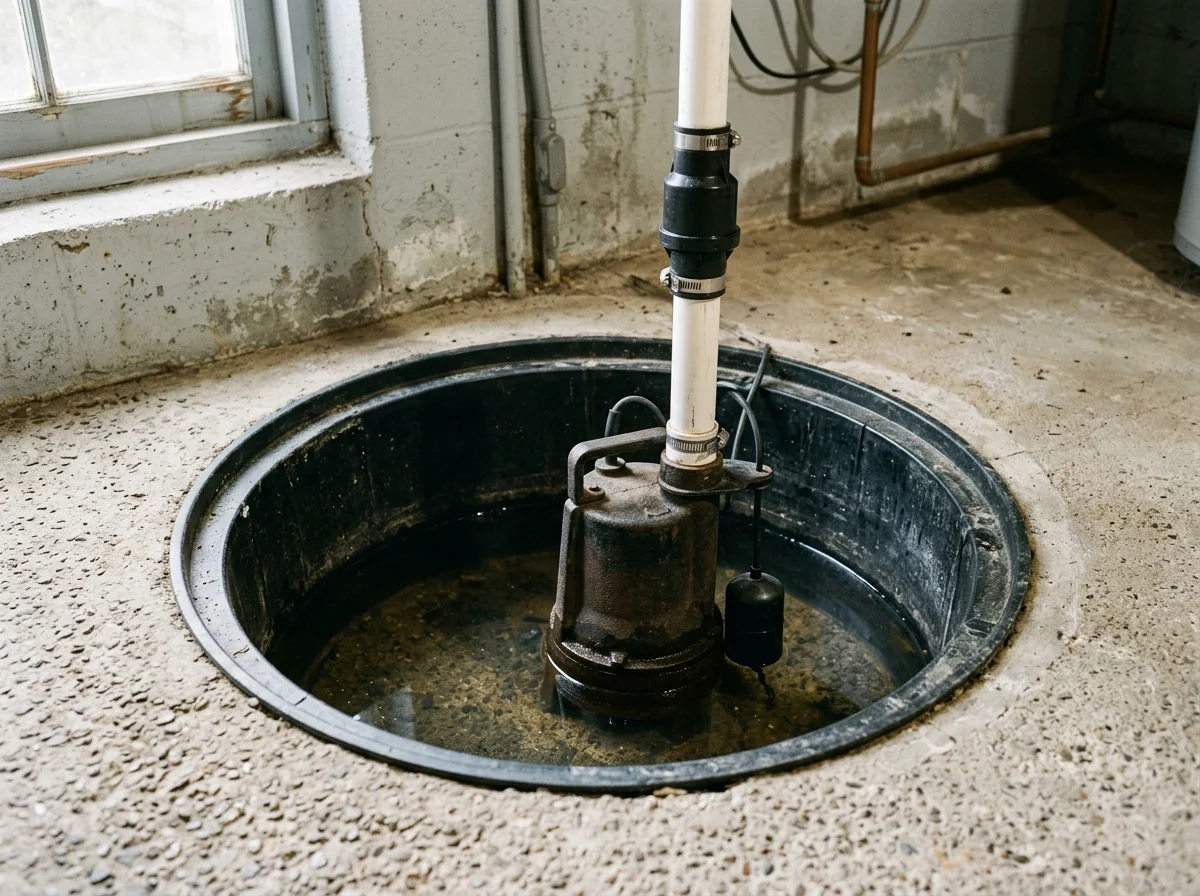
A submersible pump sits at the bottom of the pit, under water, sealed against it. That makes it quieter than a pedestal pump and keeps the pit lid closed. The housing is cast iron or thermoplastic. HomeGuide's guide says metal pumps are more durable than plastic ones and cost about double. In our view cast iron earns that price in a pit that runs hard every spring, and a thermoplastic pump is a fair choice for a pit that runs a few times a season.
Horsepower decides how high and how far the pump can push water, and HomeGuide notes that longer runs need more of it. It puts homes with frequent water at 1/3 to 1/2 HP. The glacial till under much of the city drains slowly, so plenty of basements here sit at the busy end of that range. Code asks only that the pump's capacity and head suit the expected flow, so the choice belongs to whoever has watched your pit fill.
New Sump Pit and Basin Installation
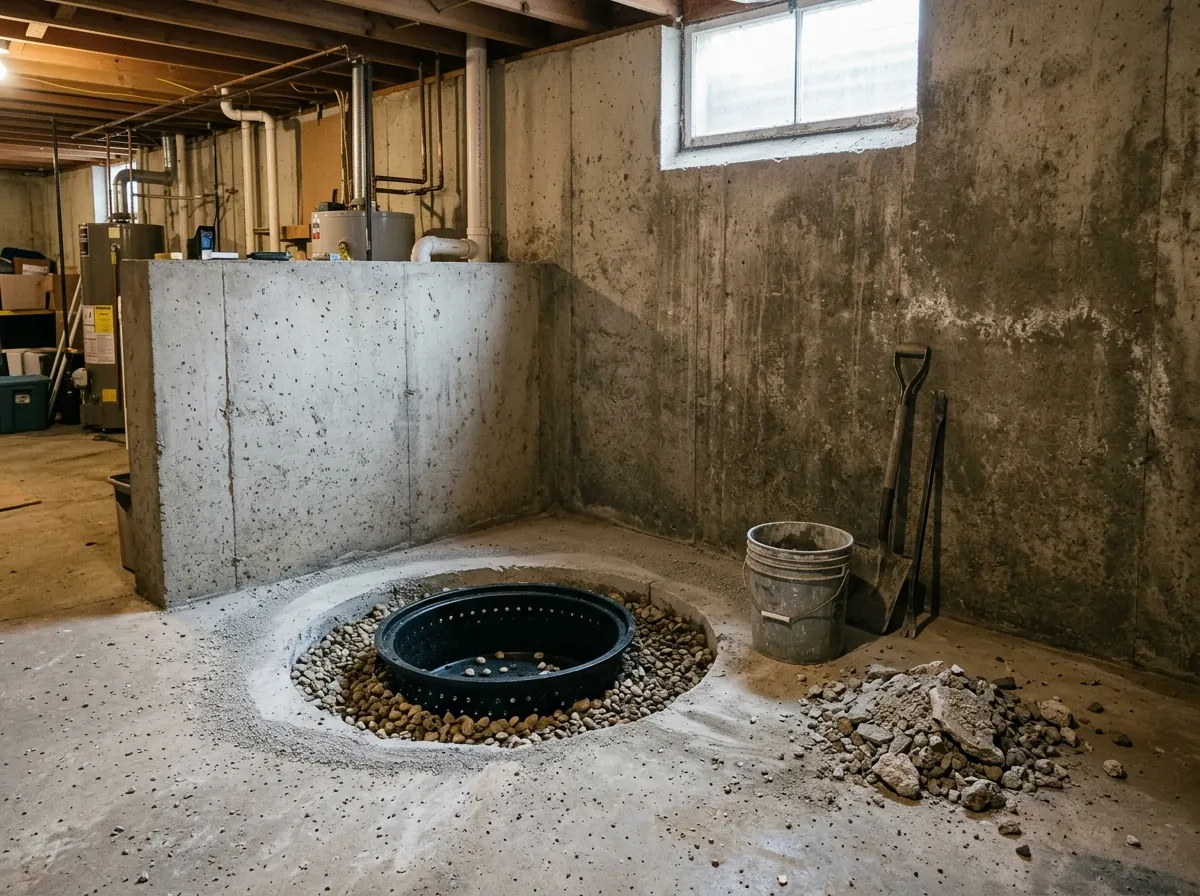
A basement with no pit gets one cut into the slab: a core or saw cut, a hole dug below the footing drain level, a perforated or solid liner set on a gravel base, and new concrete patched around it. Code sets the minimum at 18 inches across and 24 inches deep, with a solid floor for the pump and a removable cover. A larger basin holds more water between starts, so the pump cycles less often.
The pit goes where the drain tile can reach it by gravity, usually the lowest corner. If there's no drain tile yet, the pit is the first part of an interior drain tile system.
Pedestal to Submersible Replacement
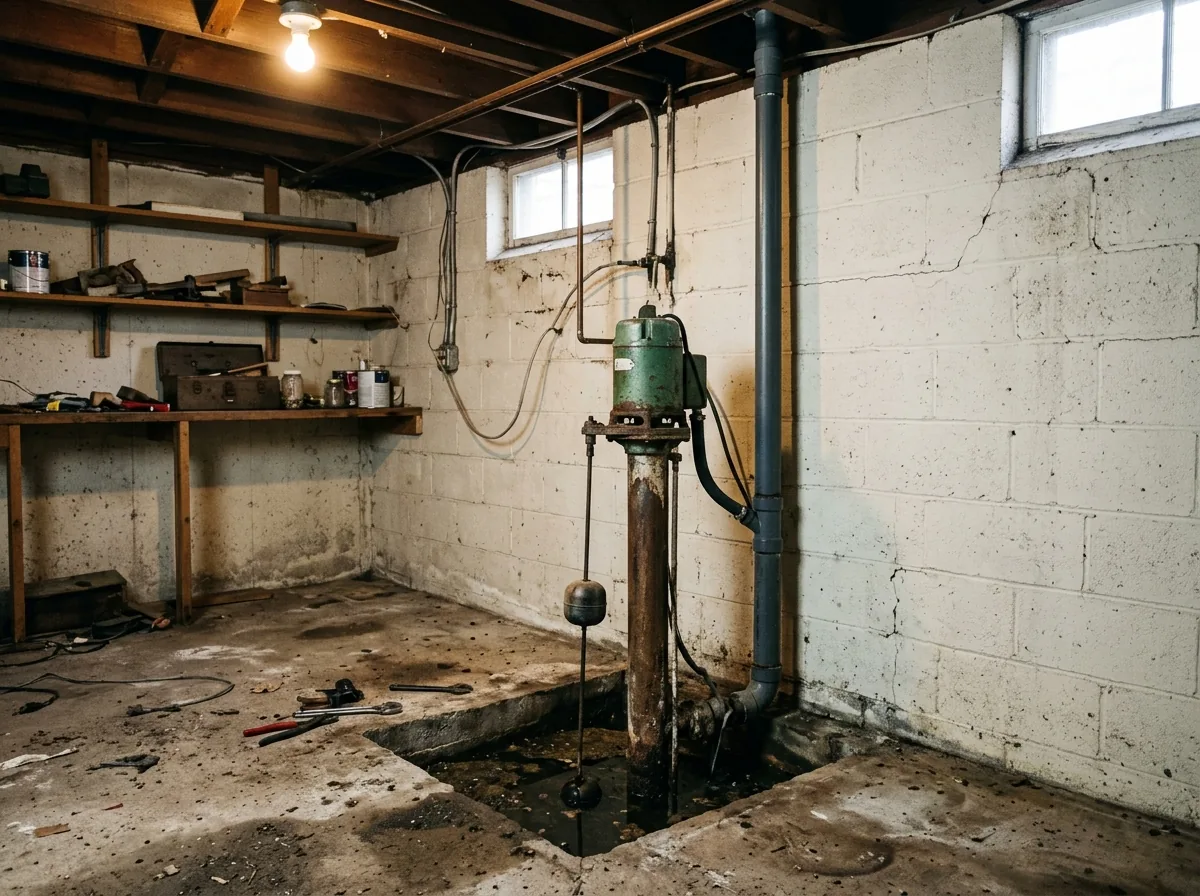
A pedestal pump has its motor on a column above the pit and only the impeller in the water. They're cheap ($100 to $400 for the unit in HomeGuide's data), easy to reach, and HomeGuide gives them 10 to 30 years. The trade-off is noise, an open pit and less capacity. The swap usually comes up when a basement is being finished, since the open pit and the motor noise end up in the new living space. The pit often has to be checked first: an old narrow or shallow liner may not fit a submersible and its float.
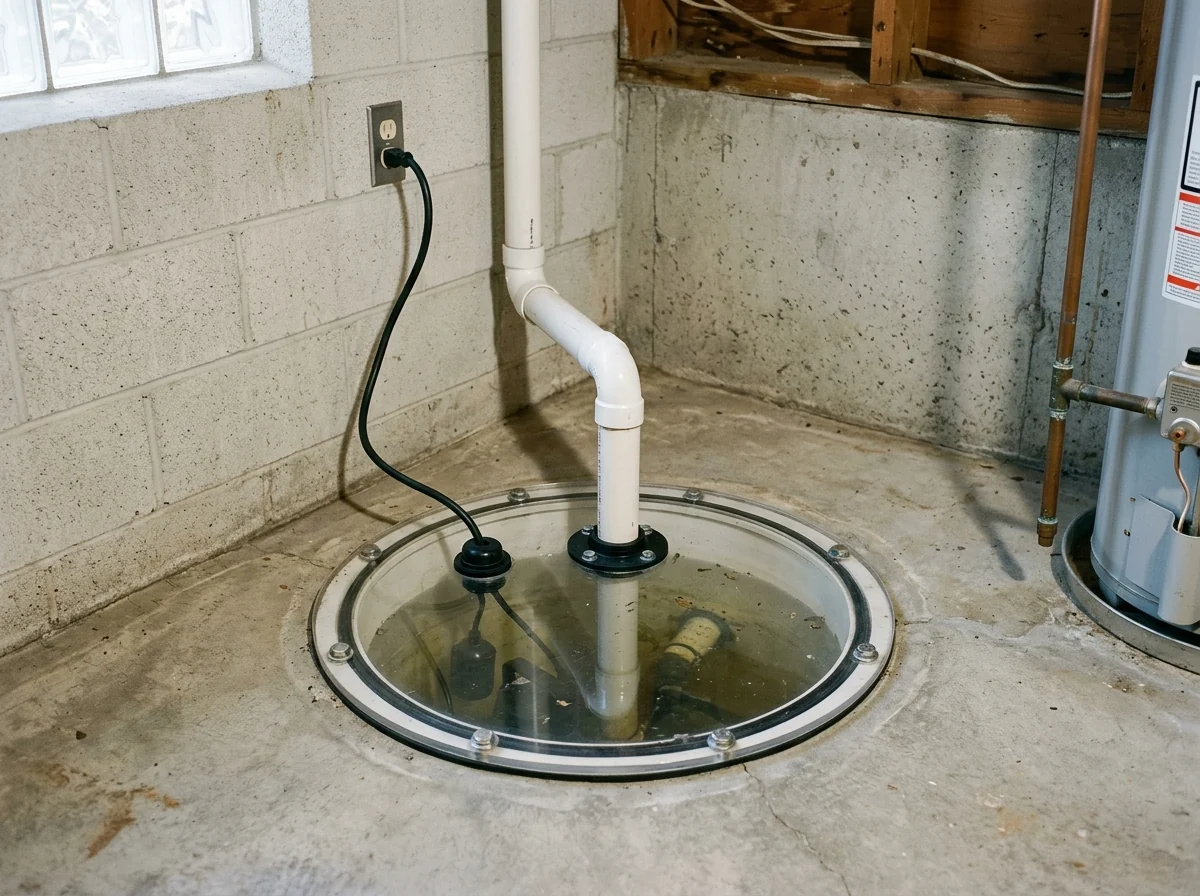
Sealed, Radon-Ready Sump Lids
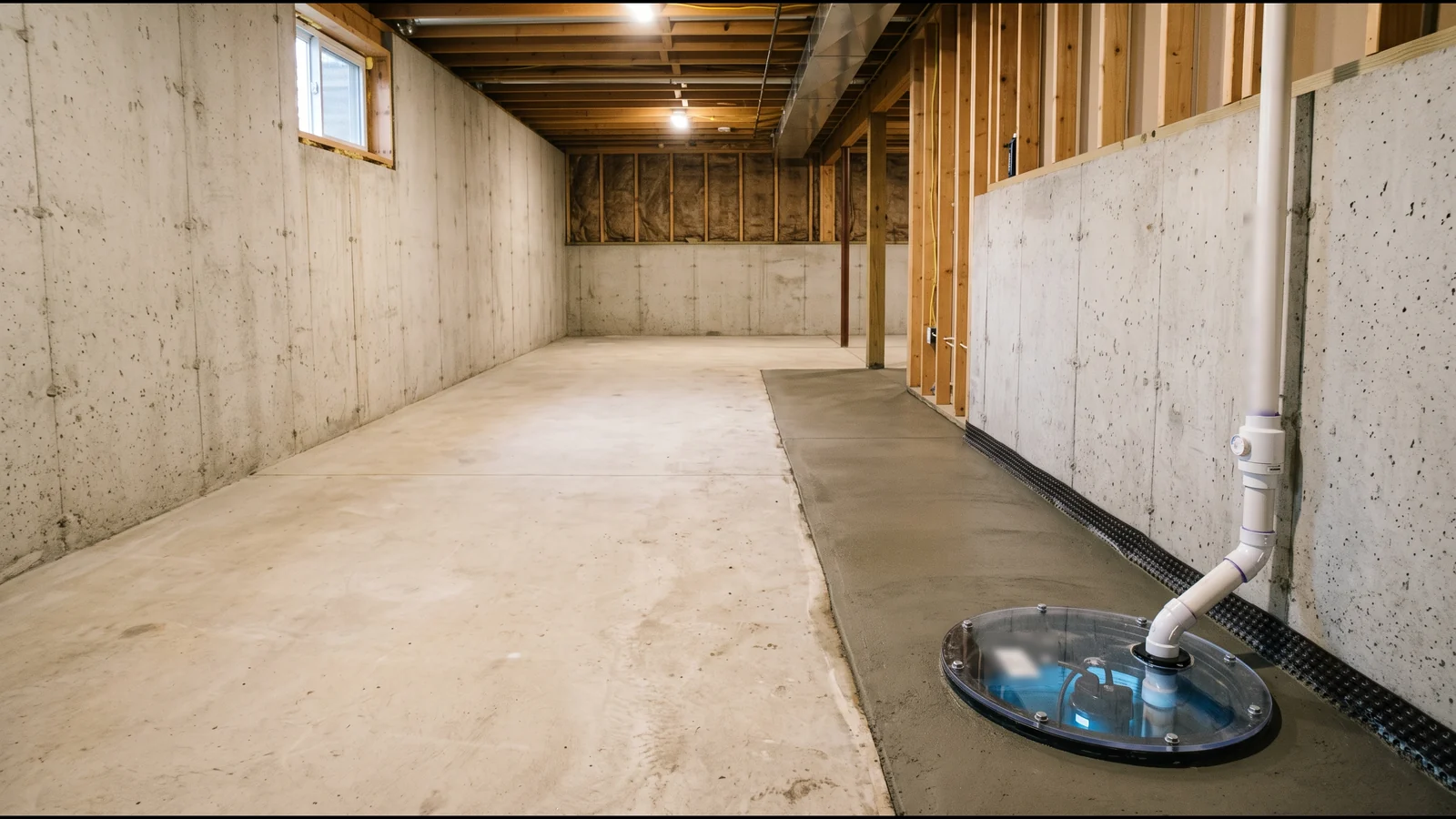
An open pit lets damp soil air into the basement. A gasketed lid with sealed pass-throughs for the pipe and cord keeps it in the ground, and a clear one lets you check the float without opening it. Oakland County is an EPA radon Zone 2 county, a moderate rating, and EPA still advises testing every house. If yours tests high, a capped sump can become the suction point of a radon system. Sealing the lid by itself isn't a radon fix, in EPA's view. Ask for a lid that can take a suction pipe later.
Discharge Line Routing and Freeze Protection
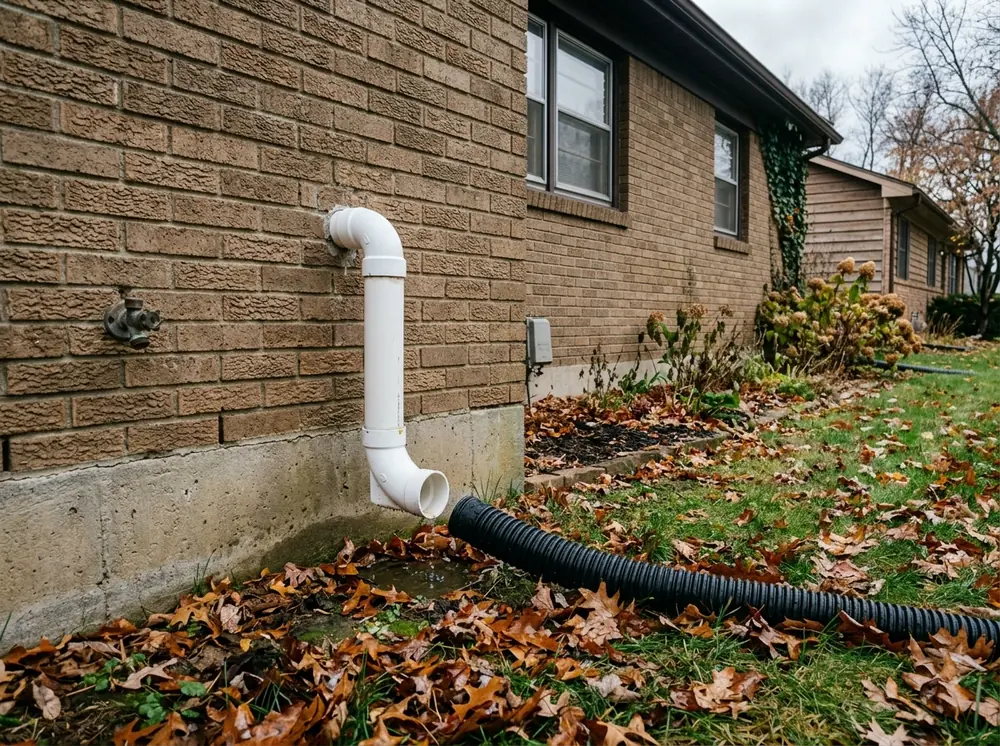
Farmington Hills allows two places for the discharge: the storm sewer, or the ground surface at least 4 feet out from the foundation, as long as it doesn't cross a neighbor's lot or land in the street right-of-way or the 20 feet beside it. The sanitary sewer is off limits. Pipe and fittings have to be at least the size of the pump's outlet, with an accessible full-flow check valve so water in the line doesn't fall back into the pit.
Winter is the weak point. A frozen hose or extension is one of the common service calls in HomeGuide's list, and the city requires a relief line wherever freezing could block a pumped system. In practice that's an outlet near the house that spills water if the buried section ices up. Long buried runs belong with buried downspout extensions, which use the same trenching.
Why Farmington Hills homeowners call Farmington Hills Waterproofing
- Free in-home inspection
- Written scope and price before work starts
- Cause found before a fix is quoted
- One local waterproofing contractor, not a call list
- No charge to homeowners for the referral
Sump Pump Installation Cost in Farmington Hills
National figures from HomeGuide's sump pump guide, dated August 2023, so prices today may differ. We haven't found Michigan-specific numbers.
| Job | National range |
|---|---|
| Pump only | $100-$800 (pedestal $100-$400) |
| Labor | $500-$1,700 |
| Typical installation | $600-$2,500 (average about $1,600) |
| Replacing a pump in an existing pit | $400-$700 |
| New pit cut through a concrete floor | $2,500-$5,000 total |
A simple installation takes 8 to 10 hours. What raises the price is concrete cutting, a long discharge run and a finished wall that has to open for the pipe. A battery backup sump pump is a separate line on the quote. If your current pump is short-cycling or won't start, a sump pump repair may be all it needs.
Sump Pump Permits, Lifespan and Testing in Farmington Hills
Farmington Hills lists sump and pump work under a plumbing permit and the pump's power under an electrical permit. Owners may file their own permits only for the home they occupy, so on most jobs the contractor files both. Ask who is pulling them before the date is booked. The Building Division is at (248) 871-2450.
HomeGuide's installation-cost guide gives submersible pumps 5 to 20 years and pedestal pumps 10 to 30 (its repair guide quotes a narrower 7 to 10 years on average; see sump pump repair), and how often the pump runs decides where yours lands. A pump that starts every few minutes through a wet spring wears faster than one that runs after the odd storm. Test it before the spring thaw: lift the lid, pour a bucket of water into the pit and watch the float start the pump and the pit drain. If it hums without pumping, cycles on and off, or the motor is near the end of that range, plan the replacement on a dry day rather than during a storm.