
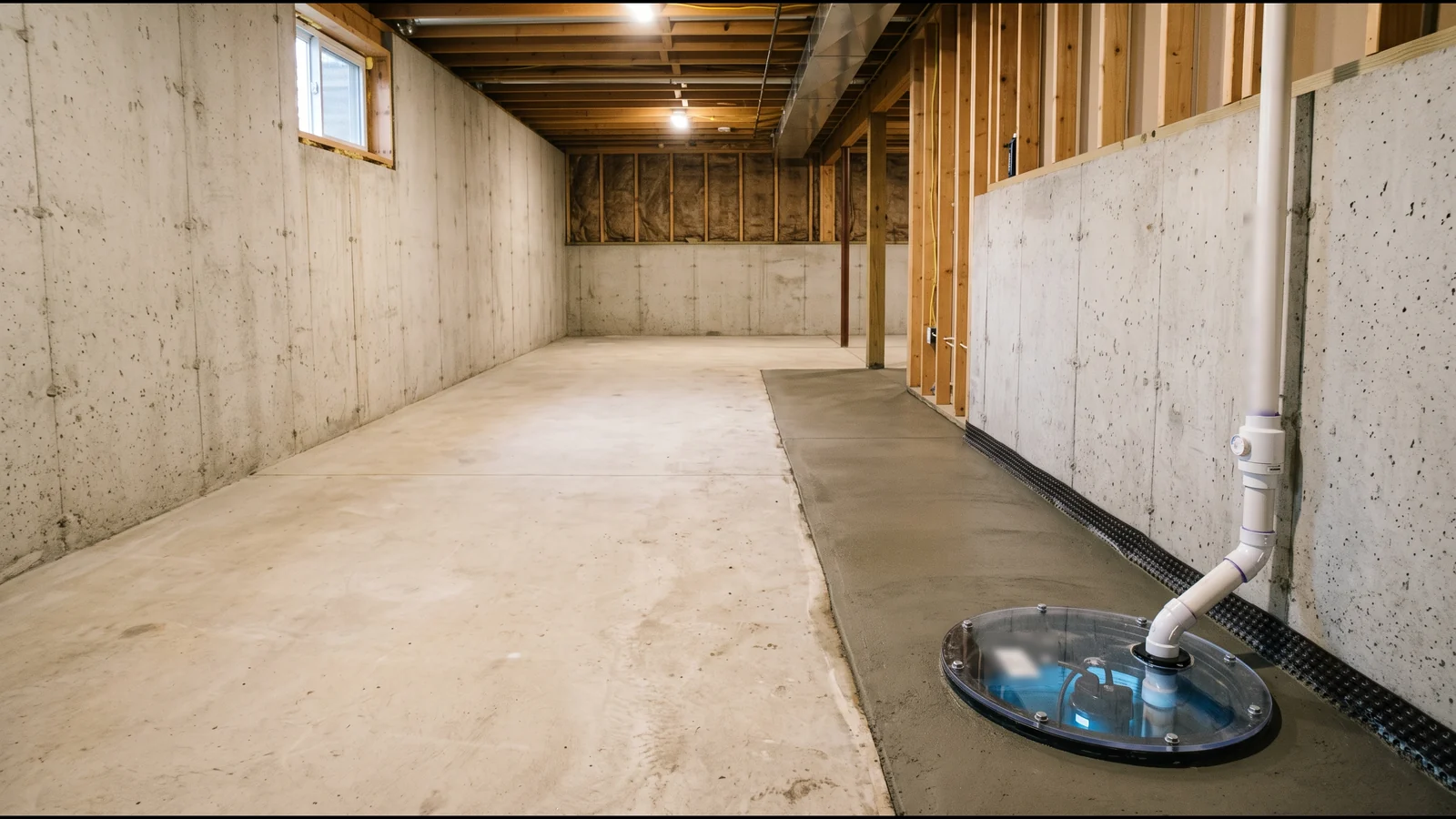
Sump Pump Repair Services
The common faults, roughly in the order a contractor checks them, and the repair-or-replace call at the end.
Float Switch Failures
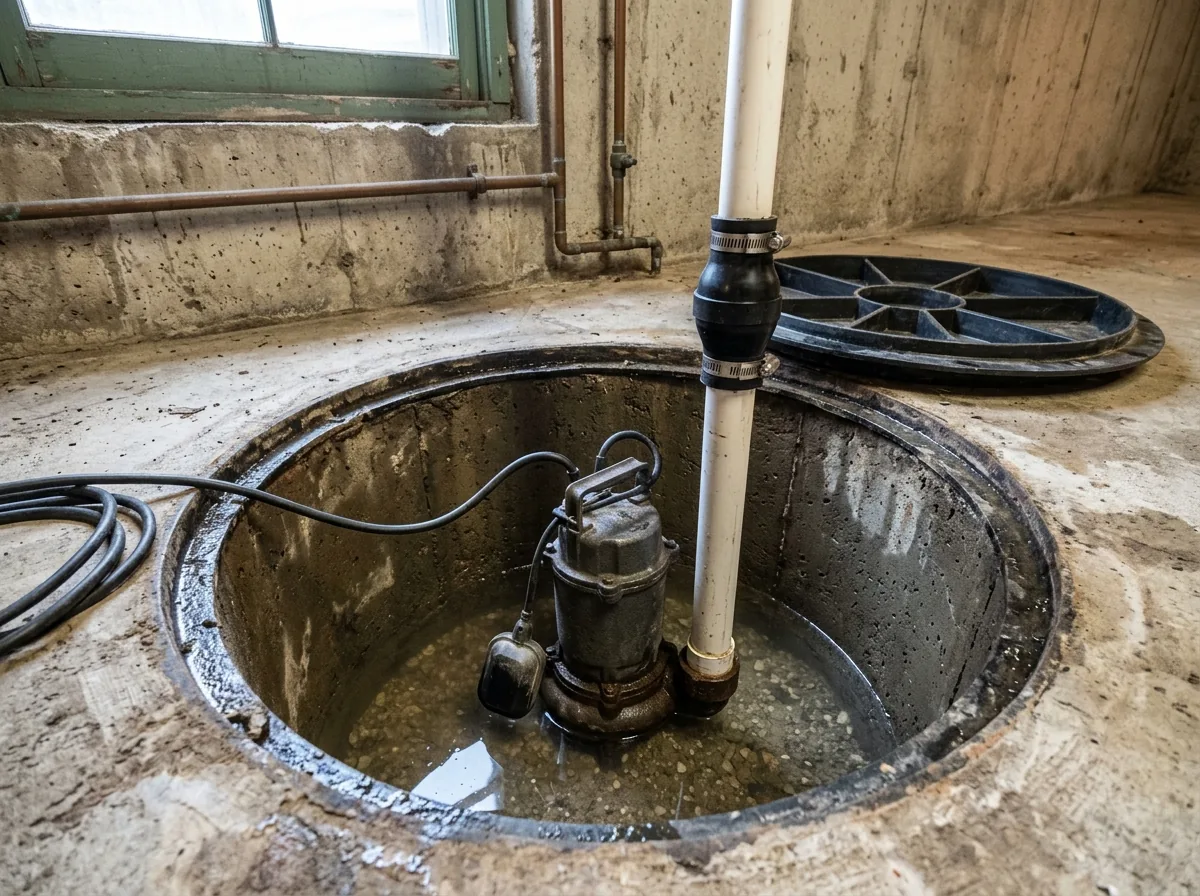
The float switch tells the pump when to run, and it's the first part a contractor checks. A tethered float swings on its cord through a 7 to 36 inch range and needs a basin at least 14 inches across. A vertical float rides a rod over 0.75 to 6.5 inches and fits a 10-inch basin. A diaphragm switch reacts to water pressure and suits the tightest pits. When a tethered float gets caught on the pit wall or the discharge pipe, the pump either never starts or never stops. The repair is usually a new switch, set to suit the pit, and a pump moved so the float swings clear.
Check Valve Replacement
The check valve sits on the discharge pipe just above the pump and stops the water in the pipe from running back into the pit when the pump shuts off. A worn valve lets that water drop back, the float rises again, and the pump re-pumps the same water over and over. You can often hear it: a clunk or a gurgle when the pump stops, then the pump coming back on soon after. HomeGuide's test is simple: pour water into the pit, let the pump empty it, and watch. If the water comes back, replace the valve. The part itself costs $10 to $30.
Burned-Out Motors and Clogged Impellers
HomeGuide calls a worn-out motor the most common sump pump problem. A motor that hums but doesn't pump, trips the breaker or runs hot is near the end. Grinding or rattling usually means the impeller is jammed with gravel or debris, which can sometimes be cleared by pulling the pump and cleaning the intake screen. A bent impeller makes the pump wobble and vibrate, and at that point a new pump costs about the same as fixing it. Rust in the pit can point to iron bacteria, which also coats the float and the intake.
Pump Running Nonstop or Short-Cycling
A pump that never shuts off may have a stuck or failed float. One that switches on and off every few seconds may have a float set too tight, a wiring fault or a bad check valve. And a pump that runs long and steady through every storm may simply be too small for the water coming in or the height it has to lift it. In a Farmington Hills winter there's a fourth cause: a frozen or iced-up discharge line, so the pump runs against a blocked pipe. The city's ordinance calls for a relief line on pumped footing-drain discharge wherever freezing could block it.
Repair vs Replace
HomeGuide's repair-cost guide puts the average life of a sump pump at 7 to 10 years, and as little as five for one that runs often, with pedestal pumps lasting longer at 10 to 15 years or more. Its installation-cost guide gives wider ranges (5 to 20 years for a submersible, 10 to 30 for a pedestal) because it covers the full spread of run times. Our rule of thumb: on a pump past about seven years, a failed motor or bent impeller is a replacement, and a stuck float or worn check valve is still a repair. Plumbers often recommend replacing because the costs come out close. A replacement is the moment to check whether the old pump was ever the right size; see sump pump installation.

Why Farmington Hills homeowners call Farmington Hills Waterproofing
- Free in-home inspection
- Written scope and price before work starts
- Cause found before a fix is quoted
- One local waterproofing contractor, not a call list
- No charge to homeowners for the referral
Sump Pump Repair Cost
National averages from HomeGuide (February 2026). We haven't found Michigan figures.
| Item | National range |
|---|---|
| Sump pump repair, average | $200-$870 |
| Pedestal pump repair | $100-$480 |
| Submersible pump repair | $200-$1,000 |
| After-hours call | $50-$150 extra |
| Pump replacement | $400-$700 |
| Annual maintenance | $100-$250 |
| Parts: check valve / float switch | $10-$30 / $20-$40 (materials) |
Plumbers bill $45 to $150 an hour plus parts in HomeGuide's data, so a quick diagnosis on a pump that's already old can be money better put toward a replacement. When you call, have the pump's age, the label or model number, and how often it runs in a wet week. A photo of the pit helps.
Most homeowners policies don't cover a failed sump pump, and the water damage that follows usually needs a separate sump overflow or water backup endorsement. Ask your agent before spring.
Checks to Make Before the Contractor Arrives
Some calls end at the outlet. Before you book, and only if the pit isn't overflowing:
- 1
Power
Check that the pump is plugged in, the GFCI outlet hasn't tripped and the breaker is on. - 2
Float
Look in the pit. Is the float free to move, or is it pinned against the wall or the pipe? - 3
Water test
Run the bucket test from the check valve section and tell the contractor what you saw: no start, no stop, or water falling back. - 4
Debris
Gravel, silt or a fallen object around the intake will starve the pump. - 5
Outside
Follow the discharge line. In winter, look for ice at the end of the pipe. A line that empties within 4 feet of the foundation, or into a floor drain connected to the sanitary sewer, should be rerouted: city ordinance sends sump water to the storm sewer or onto the ground away from the house.
Unplug the pump before you reach into the pit. If the pump has failed and water is rising, a battery backup sump pump is the part that keeps the next storm from ending the same way.