
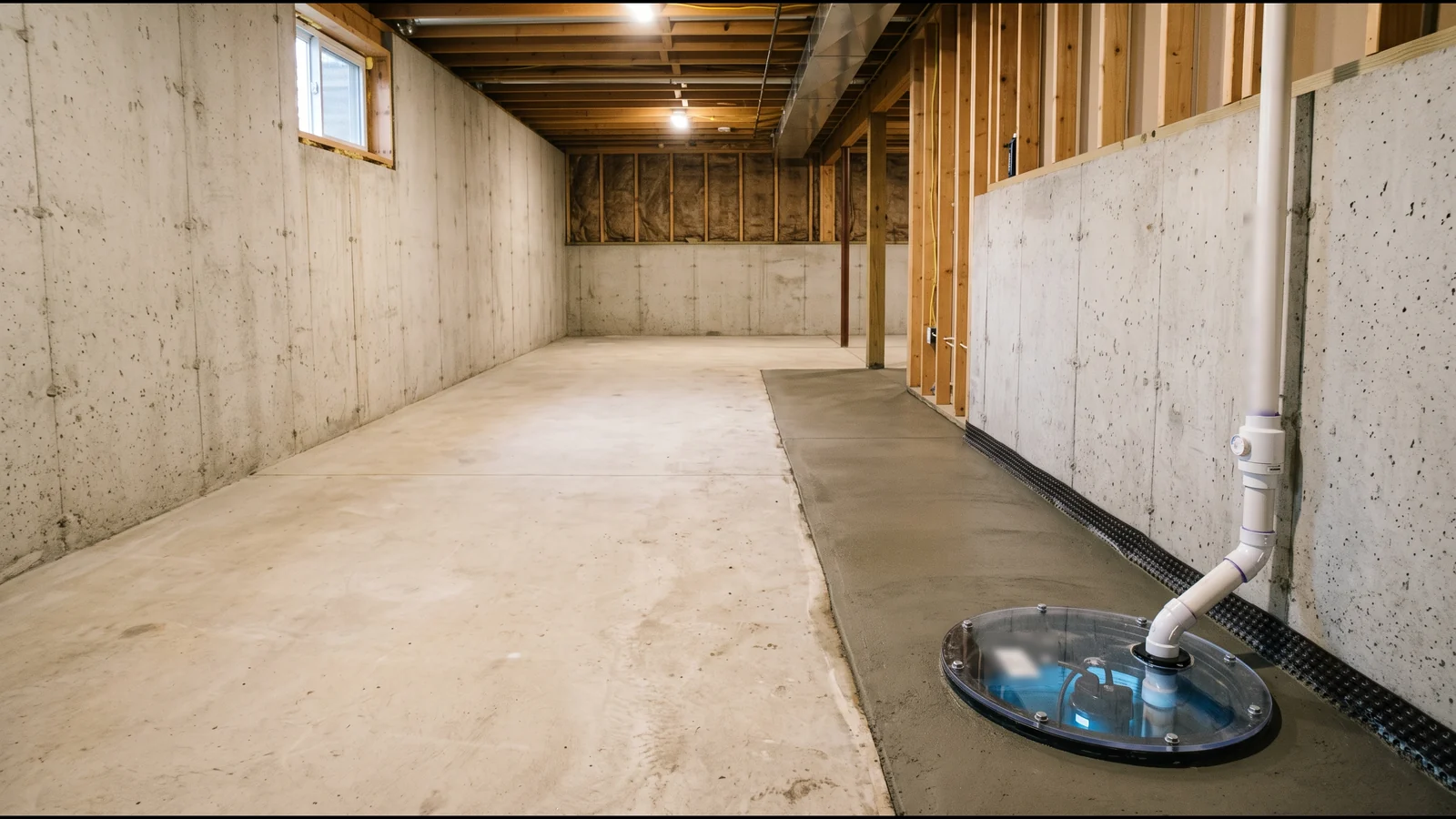
Foundation Crack Repair Methods
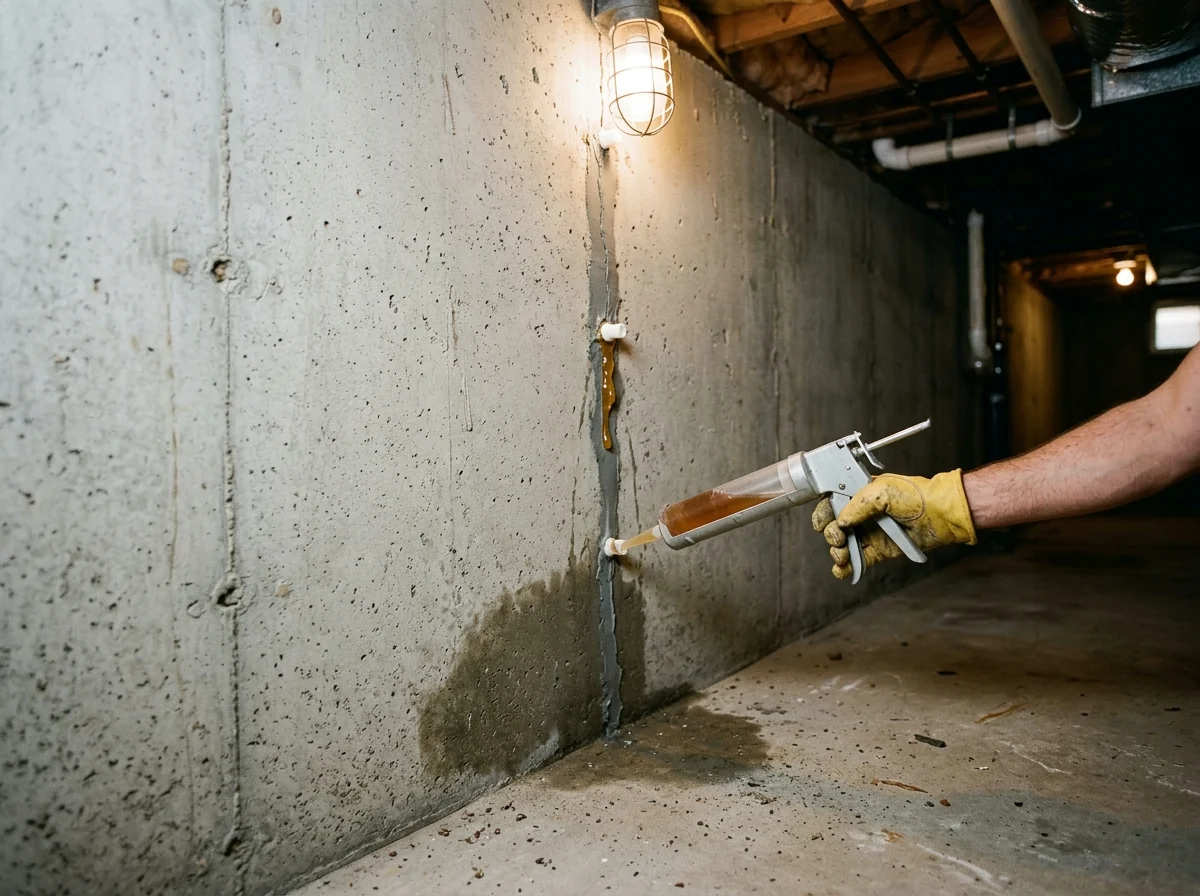
Polyurethane Injection for Leaking Cracks
A crack that leaks after a hard rain or during the spring thaw usually gets polyurethane. It reacts with the water already in the crack, foams, and fills the crack right through the wall, and it stays flexible afterwards. Simpson Strong-Tie's injection guide says polyurethane resins may be needed where water keeps seeping, because epoxy needs a dry crack to give a sound repair. HomeGuide adds that the flexibility suits cracks that open and close a little with each freeze-thaw season.
Epoxy Injection for Structural Cracks
Epoxy is for a dry, stable crack where the concrete has to work as one piece again, such as a crack near a beam pocket or under a point load. It cures harder than the concrete around it. The catch is moisture: the crack has to be dry when it's injected. A crack that's wet in April may be dry by August, so the same crack could be epoxy in one season and polyurethane in another.
Exterior Excavation and Membrane Over a Crack
Sometimes the inside face can't be reached: behind a finished wall, under a stair, or where the cracks run on. Then the contractor digs down outside to the crack, cleans the concrete, and seals the crack and a strip of wall on each side under a membrane, with drainage board and clean backfill over it. A MISS DIG 811 ticket comes first, at least three business days before digging. It costs more than injection, but the finished room inside isn't touched. See exterior basement waterproofing in Farmington Hills.
Horizontal and Stair-Step Cracks
A long crack running sideways in a poured wall, or a stair-step crack along the mortar joints of a block wall, is a different kind of problem. InspectAPedia notes horizontal cracks form where the sideways force on the wall is greatest. The wall is being pushed, and sealing the crack doesn't stop the push. These get a stabilization plan first, and on a wall that has moved, an engineer's opinion. See bowing basement wall repair.
Basement Floor Cracks
Slab cracks are mostly shrinkage, and a basement floor doesn't hold up the house. A dry floor crack can be sealed and left alone. One that seeps water after rain is a sign of water pressure under the slab, and it's the drainage that needs fixing, not just the crack. A crack where one side sits higher than the other points to settlement or frost, and needs looking at as such.
Cracks Flagged in a Home-Sale Inspection
When a buyer's inspector writes up a crack, the seller needs two things fast: a contractor's opinion on what the crack is, and a written record of the repair. Keep the estimate, the invoice, the method (polyurethane, epoxy or exterior), the crack's location and photos from before and after. HomeGuide notes that properly documented professional repairs often make little difference to resale value. A buyer's side reads paperwork. They can't tell much from fresh resin on a wall.
Why Farmington Hills homeowners call Farmington Hills Waterproofing
- Free in-home inspection
- Written scope and price before work starts
- Cause found before a fix is quoted
- One local waterproofing contractor, not a call list
- No charge to homeowners for the referral
How to Read a Crack Before You Call
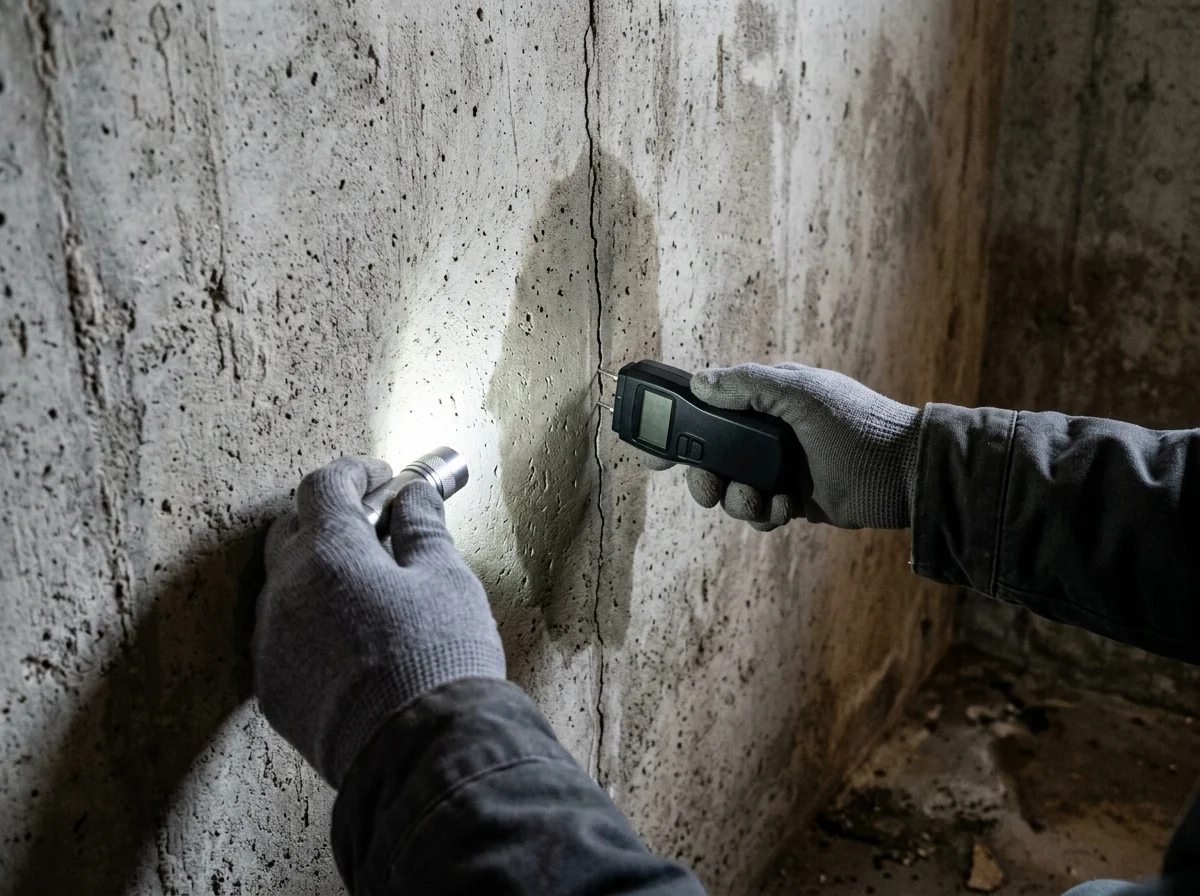
A few checks tell the contractor, and you, a lot before the visit. HomeGuide lists the first three among signs that need a professional look.
Width
Wider than about 1/8 inch is worth an inspection, even when it's dry.Direction
Horizontal cracks longer than 12 inches and stair-steps in block are wall movement. Vertical and diagonal hairlines in poured concrete usually aren't.Water
Note whether it seeps, drips or only darkens after rain. That decides polyurethane or epoxy.Movement
Pencil a line across each end with the date. If the crack runs past the mark by next season, it's still moving.Pattern
Small wet circles lined up at the same height on every wall are form-tie holes left from pouring, not cracks.
Foundation Crack Repair Cost in Farmington Hills
We haven't found Michigan figures. These are HomeGuide's national ranges, dated on each line.
| Repair | National range | HomeGuide date |
|---|---|---|
| Hairline or vertical wall crack, injected | $250 to $800+ per crack | Feb 2026 |
| Wide, horizontal or stair-step wall crack | $1,000 to $5,000+ per crack | Feb 2026 |
| Crack with a bowed wall | $5,000 to $15,000+ | Feb 2026 |
| Floor (slab) crack, sealed | $250 to $800 per crack | Mar 2026 |
| Floor crack, epoxy or polyurethane injection | $400 to $1,500 per crack | Mar 2026 |
| Exterior membrane, installed | $4 to $7 per sq ft | Jan 2026 |
Access moves the price more than the crack does. Paneling, a furnace or built-in shelving against the crack adds removal and refitting time, and exterior work adds the dig.
Local Factors Behind Basement Wall Cracks
More than half of the city's housing units went up before 1980, according to the Census Bureau's 2024 survey, so a typical basement wall here has stood through decades of frost and spring melt. Our own reading of the federal soil maps puts about a fifth of the city's mapped soil in the somewhat poorly drained class and roughly another eighth in the very poorly drained one. Wet soil keeps water pressed against the wall, and that water finds a shrinkage crack. A contractor who seals the crack without checking the downspouts and grading on that side has done half the job.