
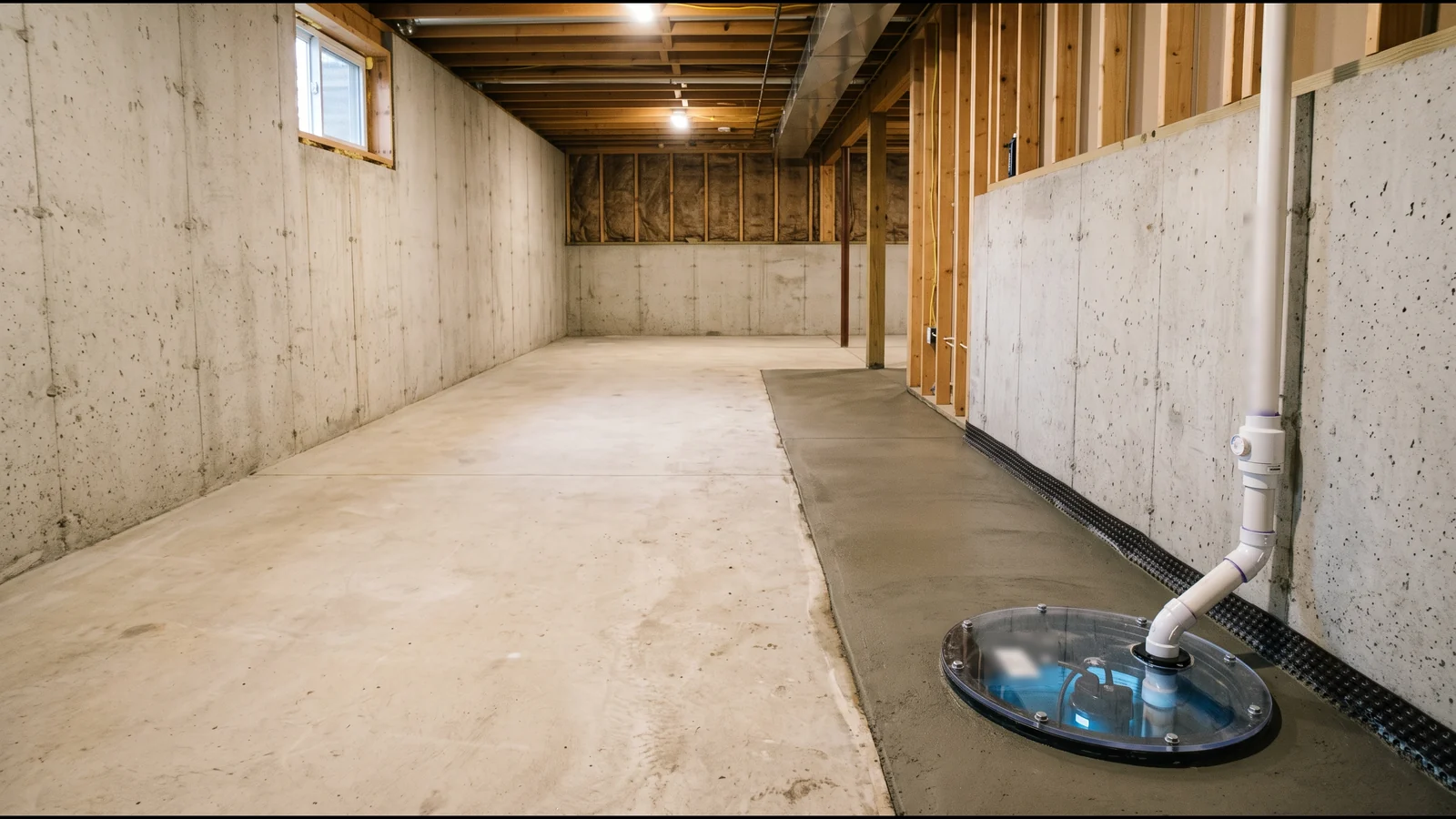
Window Well Types and Parts
The well holds back the soil, and the parts around it keep water and debris out and let a person climb out when the window is an exit.
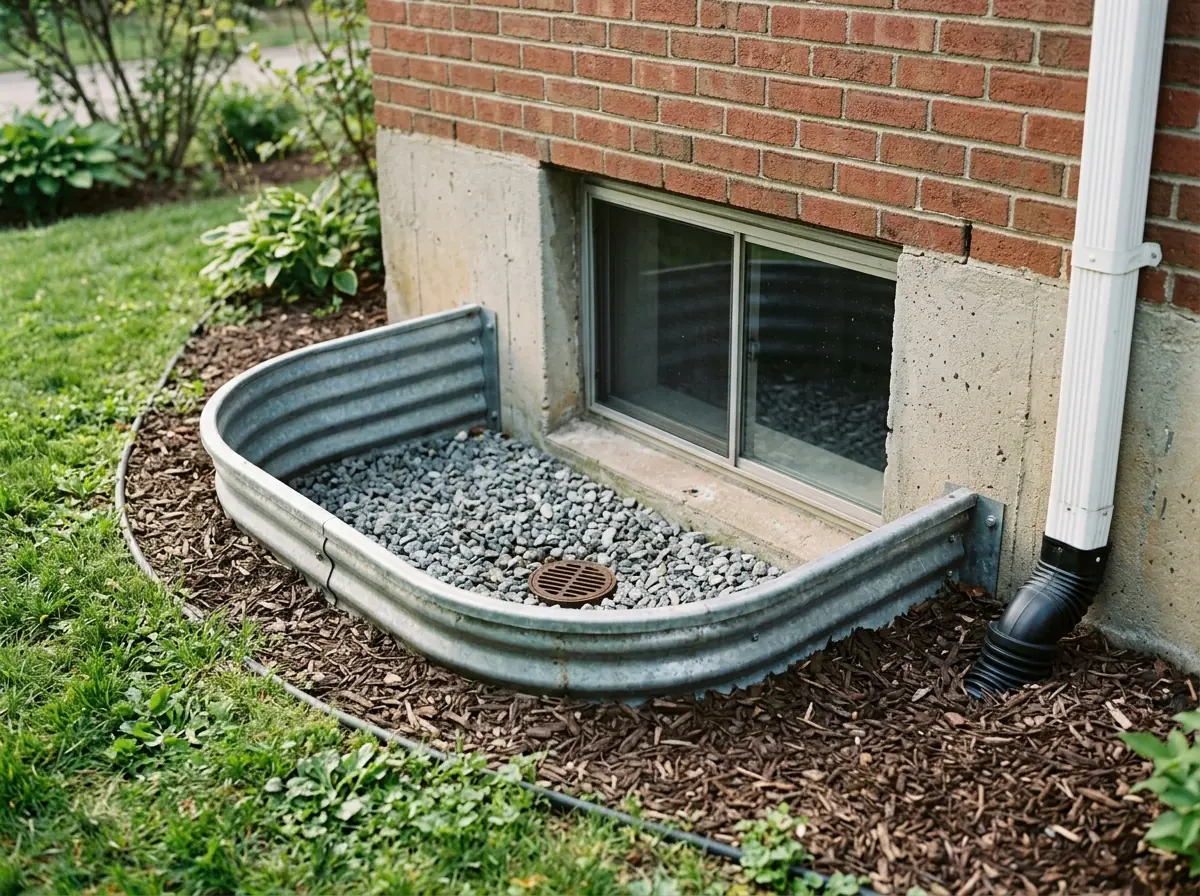
Galvanized Steel Window Wells
The corrugated metal half-circle is the most common well. It's bolted to the foundation at the flanges, set a little above finished grade so surface water runs past, and backfilled outside. Steel is the cheapest well in HomeGuide's national data. It can rust over time where it sits in wet soil. On older homes the well is often still there but has settled, tipped away from the wall or rusted through at the bottom, letting soil slump into the gravel.
Composite and Terraced Egress Wells
Plastic and composite wells don't rust and are lighter to set. Fiberglass wells are often molded to look like stone. Terraced wells are wide stepped units, and the steps double as the way out, which saves a separate ladder in a deep well. For an egress window, the 2015 IRC wants at least 9 square feet of well area and 36 inches of projection and width, enough for the window to open all the way. For the window and the wall cut, see egress window installation.
Window Well Covers
A cover keeps out leaves, snow, rain and small animals, and it stops a person from stepping into an open hole. Clear polycarbonate domes let the most light in. Steel grates and walk-on covers carry weight next to walks and patios. Over an egress well, the code says covers and grates must come off from inside without a key, tool, special knowledge, or more force than opening the window takes. A screwed-down cover over a bedroom window fails that test.
Window Well Drains
Under code, a window well connects to the foundation drain or another approved drain. The only exception is a foundation on well-drained sand and gravel. The usual setup is a vertical perforated pipe from the well bottom down to the footing tile, capped with a grate and buried in washed gravel. Many Farmington Hills homes sit on slow-draining clay till. On those lots, a well with no drain fills in a heavy rain and leaks in around the window frame.
Liners, Ladders and Extensions
A well deeper than 44 inches that serves an egress window needs a ladder or steps fixed in place, with rungs at least 12 inches wide and no more than 18 inches apart. The code lets the ladder take up to 6 inches of the well's required size. Extensions raise an existing well when new soil or mulch has built up to the rim. Liners hide corrugated steel and bounce more light into the room.
Why Farmington Hills homeowners call Farmington Hills Waterproofing
- Free in-home inspection
- Written scope and price before work starts
- Cause found before a fix is quoted
- One local waterproofing contractor, not a call list
- No charge to homeowners for the referral
Why Basement Window Wells Fill With Water
A window well is a hole dug in the ground beside the wall, so it collects whatever reaches it. The usual causes, in the order we'd check them:
No drain, or a plugged one
Silt and leaves clog the drain grate, or the well never had a pipe to the footing tile at all.A downspout nearby
Roof water dumped next to a well soaks the soil around it. EPA's Indoor airPLUS guidance wants downspout water released no closer than 5 feet to the house.Grade sloping in
The ground around the well should fall away. Code wants a drop of at least 6 inches over the first 10 feet out from the wall.Rim too low
When mulch or sod has risen to the top of the well, surface water pours over.A perched water table
Glynwood soil, mapped in the city, carries a perched water table 1 to 2 feet down from January to April, according to the NRCS. A basement window well often reaches below that line.
If water stands against the window glass, call before the next storm. The window seal was never built to hold back standing water.
Window Well Cost in Farmington Hills
We haven't found Michigan figures, so these are HomeGuide's national ranges (February 2026).
| Item | National range |
|---|---|
| Window well replacement, total | $1,000-$5,000 |
| Steel well (material) | $400-$800 |
| Plastic or composite well | $600-$1,600 |
| Fiberglass well | $1,000-$2,000 |
| Egress ladder | $100-$300 |
| Window well cover | $250-$500+ |
| Labor | $400-$1,400+ |
| Permit | $50-$200 |
The labor range depends mostly on digging. Swapping a well in the same hole is quick. A deeper egress well, or one where the drain has to be run down to the footing tile, means more excavation. Farmington Hills lists window replacement and structural changes under building permits. A new egress opening may count as a structural change, so ask the contractor which permit your job needs, or call the Building Division at (248) 871-2450.