
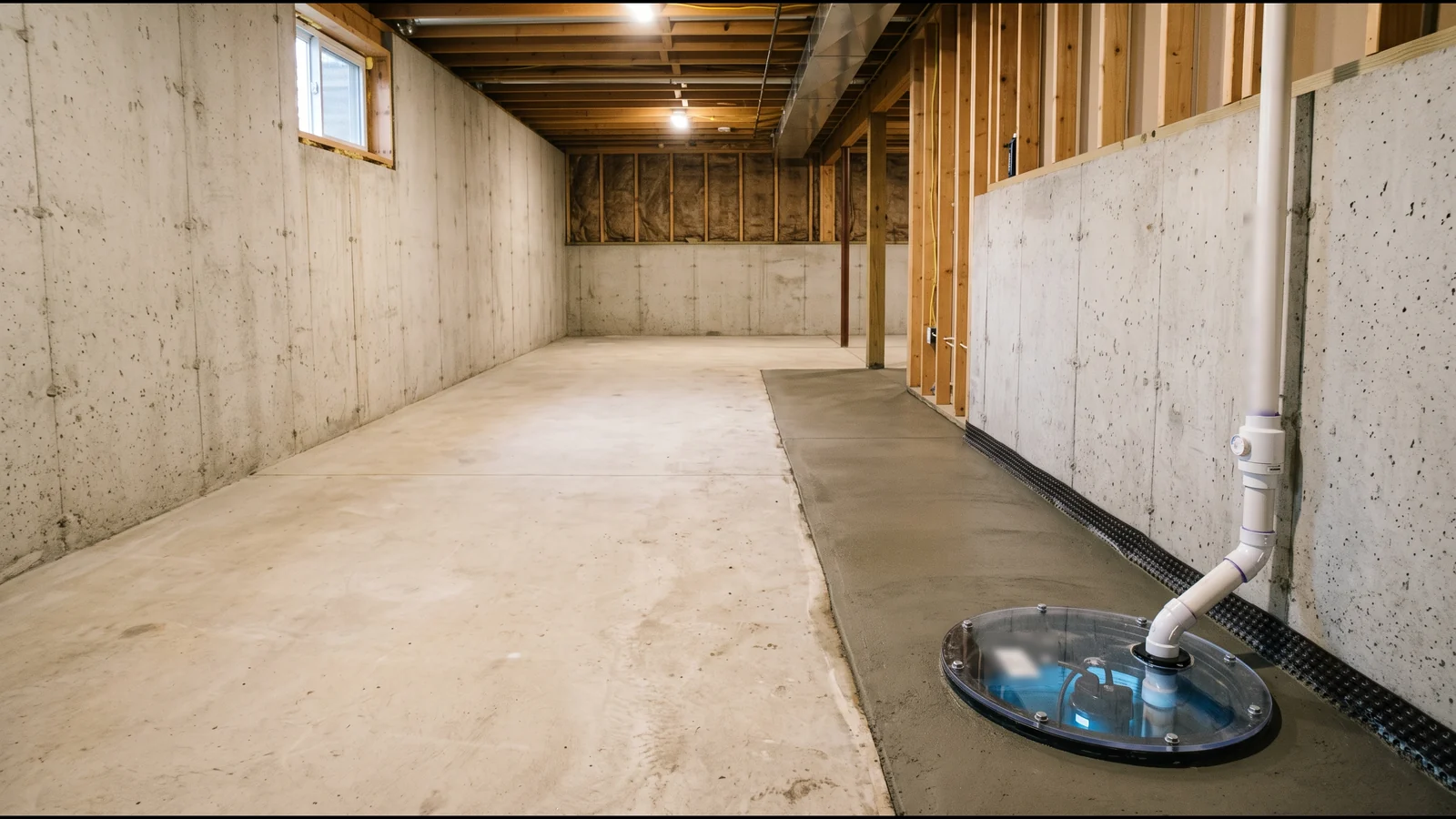
Buried Downspout Drainage Options
Roof water only. For water running across the lawn, see yard drainage.
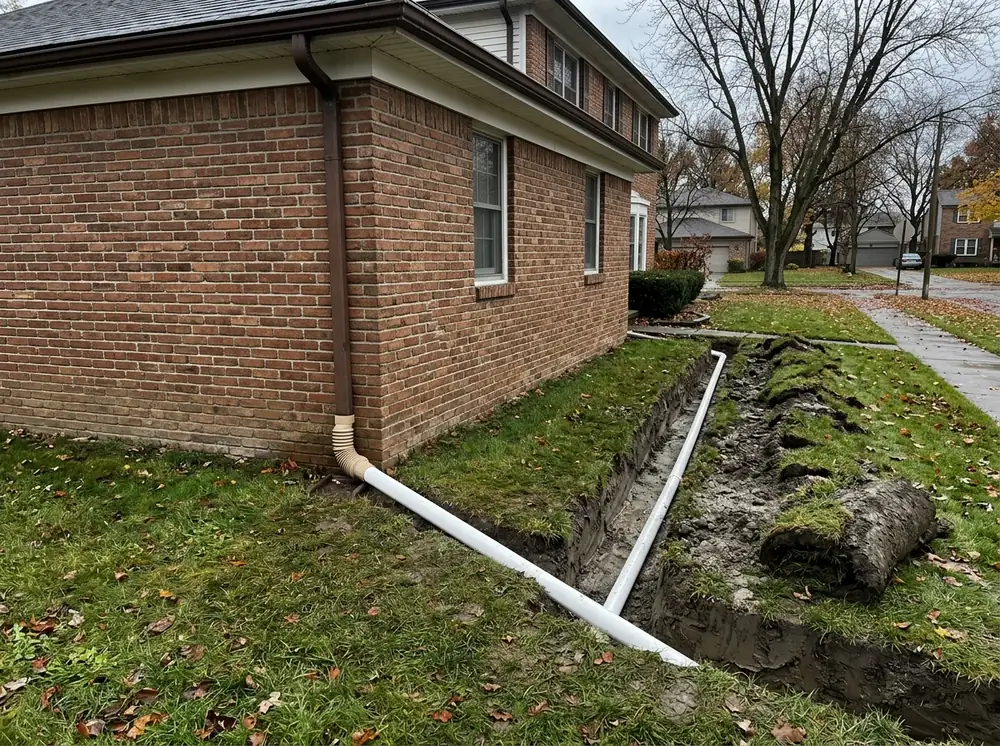
Buried PVC Downspout Lines (SDR 35 vs Corrugated)
The pipe choice decides how long the line lasts. Solid 4-inch PVC sewer pipe, sold as SDR 35, has smooth walls that water and debris slide through and enough stiffness to hold its shape under soil and foot traffic. Black corrugated pipe is cheaper and easier to lay around corners, but plumber and columnist Tim Carter of Ask the Builder dislikes it because it crushes easily, is hard to clean out and lets roots in at the joints. For a line that will sit under a lawn for decades, we'd pay for SDR 35. Either way the line needs a steady fall to its outlet, and a cleanout or a clean-out-friendly connection at the downspout end.
Pop-Up Emitters
A pop-up emitter is a cap at the end of the line, set flush with the lawn. When water fills the pipe, the lid lifts and the water spills out across the grass, and then it drops shut. It needs to sit lower than the downspout and on ground that keeps falling away from the house. Our view on emitters in a Michigan winter: the last few feet of pipe can hold water that freezes, and a frozen emitter backs water up to the downspout. A small gravel pocket under the emitter, or a weep hole at the low point, lets the line drain between storms. Keep the emitter out of the path of a walk or driveway apron, where its outflow can freeze into a sheet of ice.
Downspout Dry Wells
Where there's no slope to daylight and no storm sewer to reach, a downspout line can end in a buried dry well. The size comes from the roof. One inch of rain on 1,000 square feet of roof is roughly 620 gallons, by USGS's figures, and the National Weather Service's 1991-2020 normals for the area come to about 34 inches of precipitation a year. A 250-gallon well under one downspout fills quickly in a summer storm if the clay around it drains slowly. Ask for a percolation test, and expect an overflow emitter above the well. HomeGuide suggests setting a dry well about 5 to 6 feet deep so it doesn't freeze, and cleaning it out once a year. Dry wells as a yard-wide fix are on the yard drainage page.
Curb and Storm Connections
Running a downspout line to the street or a storm structure gets the water off the lot entirely. The city's storm-drain ordinance allows stormwater into the storm system, and its sewer ordinance makes it unlawful to send roof water into the sanitary sewer. What we haven't found is a city rule on cutting a line through the curb. Work inside a city road right-of-way needs a right-of-way permit from the DPS Engineering Division (248-871-2560; $75 for a residential permit), so call them before anyone saws the curb or taps a storm inlet. Don't borrow the city's sump rules for this either. The 4-foot and 20-foot distances in the sump discharge ordinance are written for footing drain water, and roof water is a separate question for Engineering.
Above-Ground Extensions and Splash Blocks
Cheap as they are, above-ground extensions still have to reach far enough. EPA's Indoor airPLUS specification carries downspouts to sloping ground at least 5 feet from the foundation, or to an underground catchment at least 10 feet away. Farmington Hills' own 5-foot roof drain rule exempts one- and two-family homes, but it does apply where a house once had roof water piped into the sanitary sewer: those owners must install splash blocks and conductors carrying the water at least 5 feet out. A hinged extension that flips up for mowing beats one that gets left in the garage.
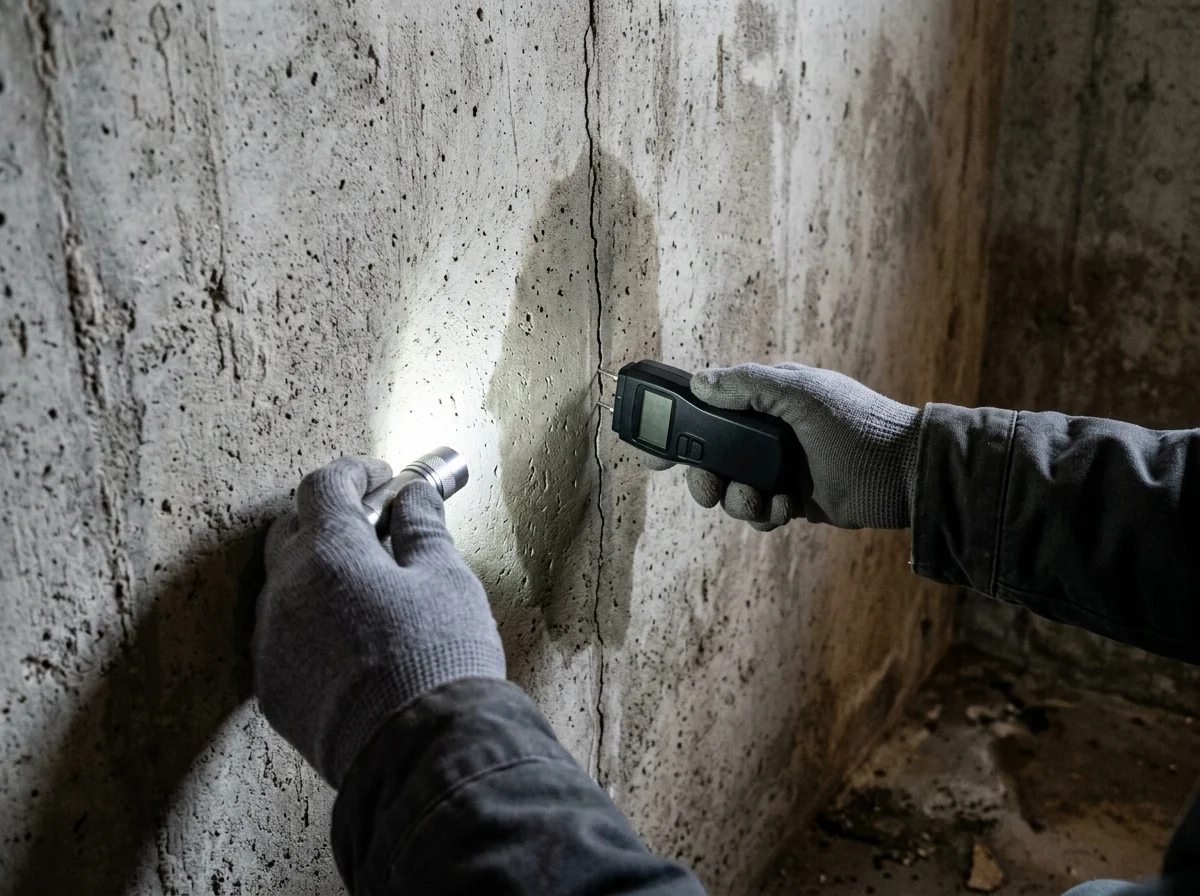
Why Farmington Hills homeowners call Farmington Hills Waterproofing
- Free in-home inspection
- Written scope and price before work starts
- Cause found before a fix is quoted
- One local waterproofing contractor, not a call list
- No charge to homeowners for the referral
Buried Downspout Extension Cost
National prices from HomeGuide. We haven't found Michigan figures.
| Item | National range | HomeGuide date |
|---|---|---|
| Buried downspout, per downspout | $150-$350 | Nov 2025 |
| Underground downspout pipe, per foot | $15-$35 | Feb 2026 |
| Pop-up (bubbler) emitter, added | $30-$85 | Feb 2026 |
| Downspout dry well | $300-$1,500 | Feb 2026 |
| Above-ground extension | $5-$20 | Nov 2025 |
HomeGuide's per-downspout price includes up to 10 feet of extension, trenching, a catch basin, pipe and a bubbler. A longer run, SDR 35 instead of corrugated, or a dry well raises it.
Planning a Buried Downspout Run
- 1
Count the downspouts and the roof behind each
A downspout draining a long back slope carries much more water than one at a garage corner. - 2
Pick the outlet first
Daylight, emitter, dry well or storm connection, and check that the water won't flow onto the next lot. Michigan's natural flow rule says you can't increase the water you send to a neighbor. - 3
Call MISS DIG 811
At least three business days before the trench, even for a shallow line. - 4
Keep the fall steady
No dips where water can sit and freeze. Leave the top of the line reachable at the downspout, with a removable screen or adapter, so it can be flushed with a hose. - 5
Grade over it
Restore the soil so it slopes away from the house, at least 6 inches in the first 10 feet, before the sod goes back.