
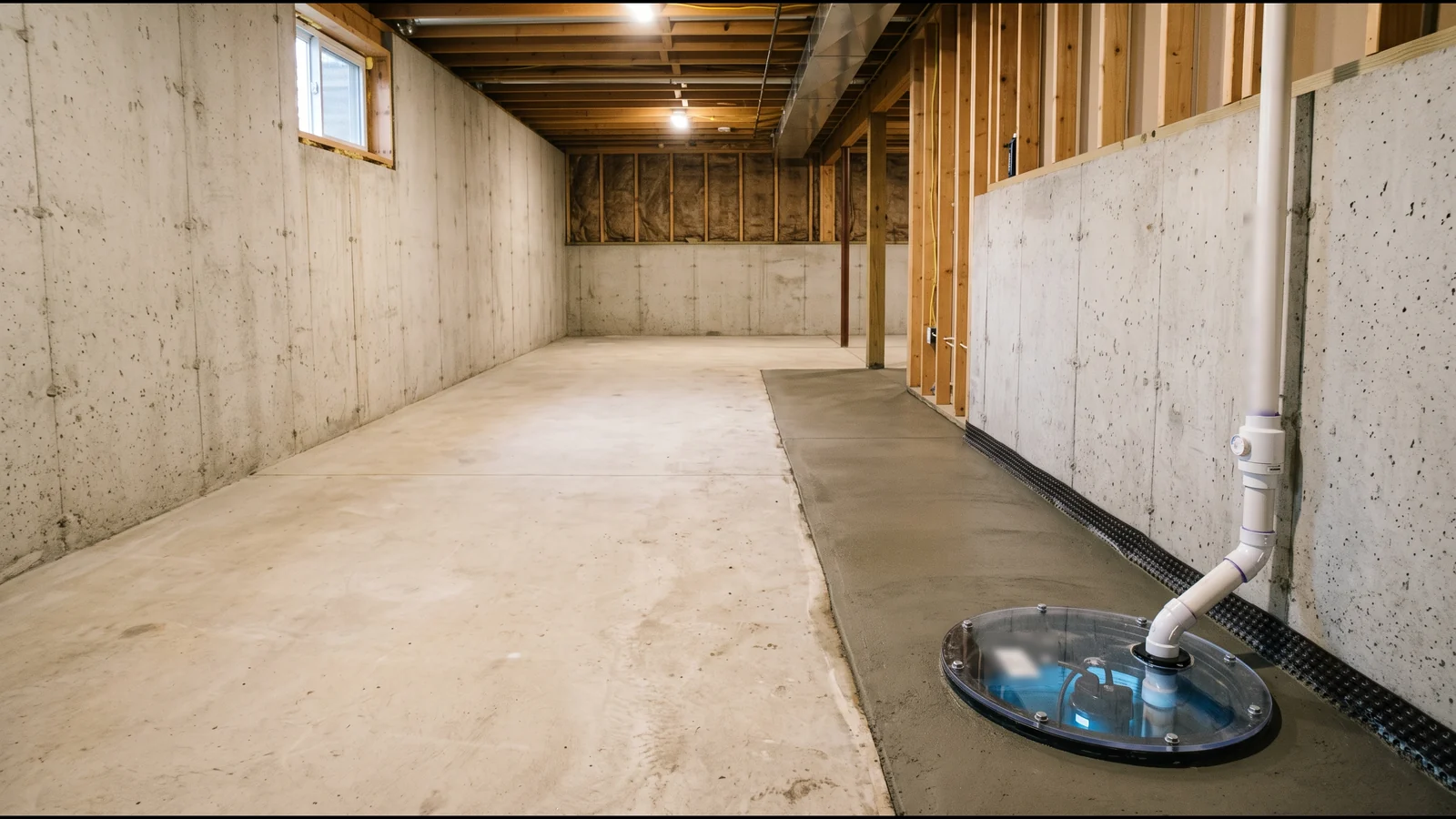
Crawl Space Encapsulation, Layer by Layer
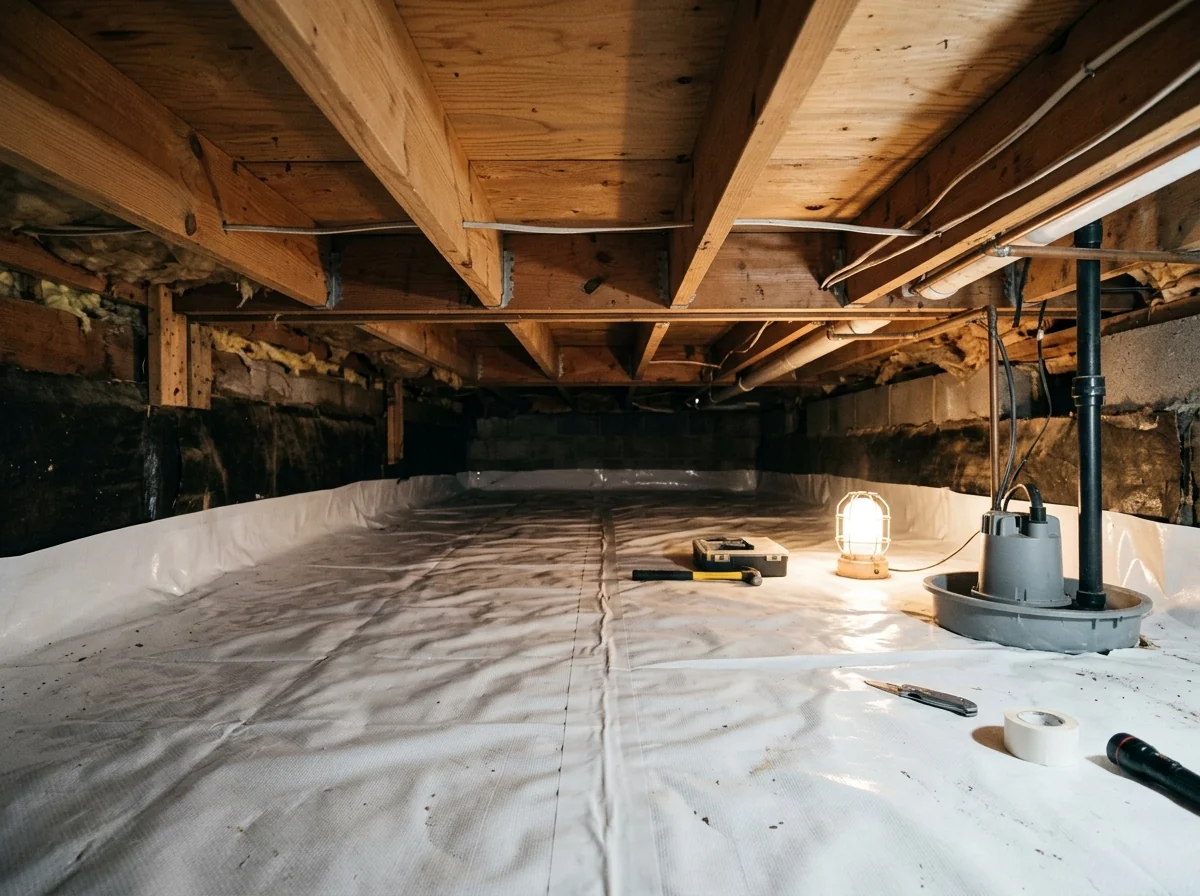
Crawl Space Vapor Barriers
The vapor barrier is the base layer and the cheapest part. Under the residential code, all bare soil gets one unbroken Class I vapor retarder. Seams overlap by 6 inches and are taped or sealed, and the sheet climbs 6 inches or more up the wall, where it's fastened and sealed. It doesn't name a thickness. HomeGuide prices material from 6 mil to 20 mil at $0.30 to $0.70 per square foot, and $2 to $4 per square foot installed. We'd lean toward a heavier, reinforced sheet where a furnace, ducts or plumbing mean someone will crawl over it every year.
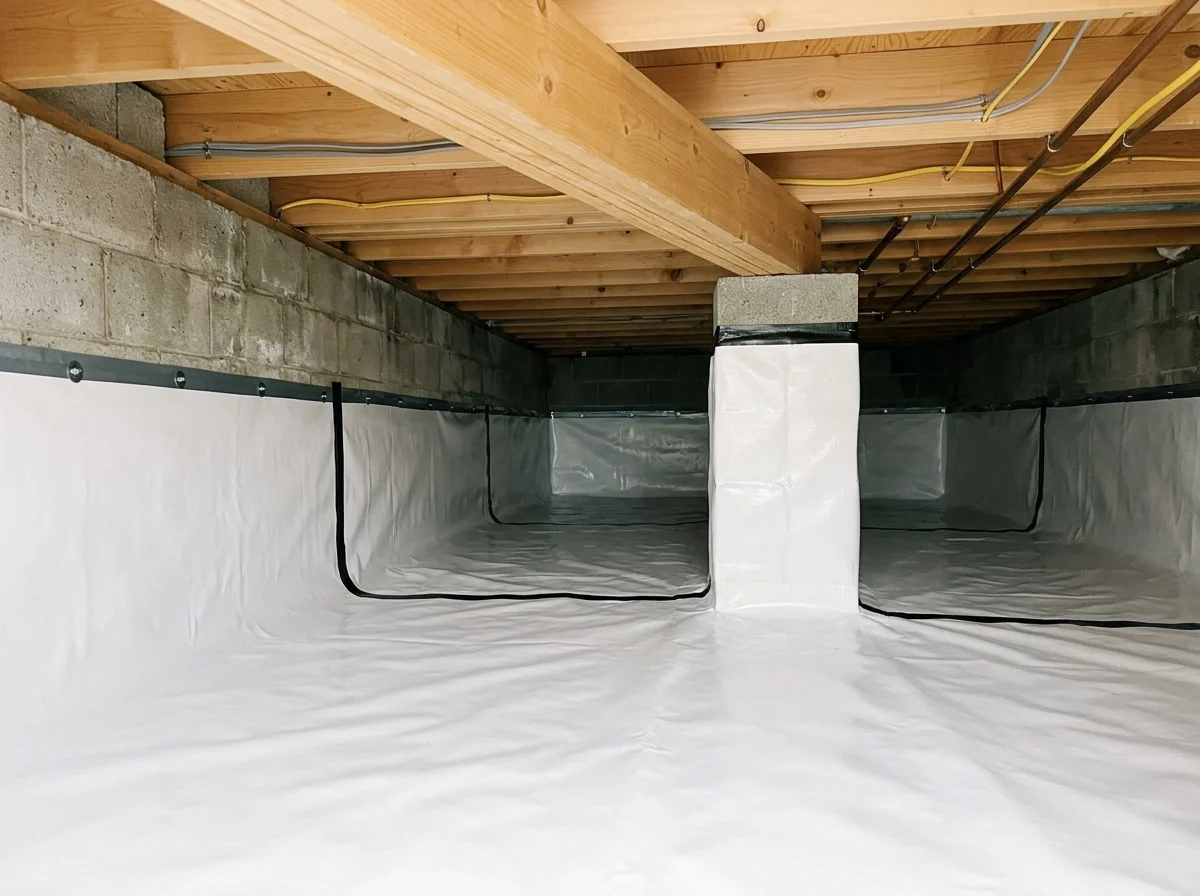
Full Crawl Space Encapsulation
Encapsulation carries the liner past that 6-inch minimum, up the walls and around each pier, and seals it to the wall or the wall insulation. Every seam is taped and every penetration sealed. Building Science Corporation's guidance is to treat the crawl space as a mini-basement: unvented, ground sealed, walls insulated and the air conditioned, rather than vented to the outdoors. Under the code, a crawl space with its vents closed also needs a way to condition the air, covered next.
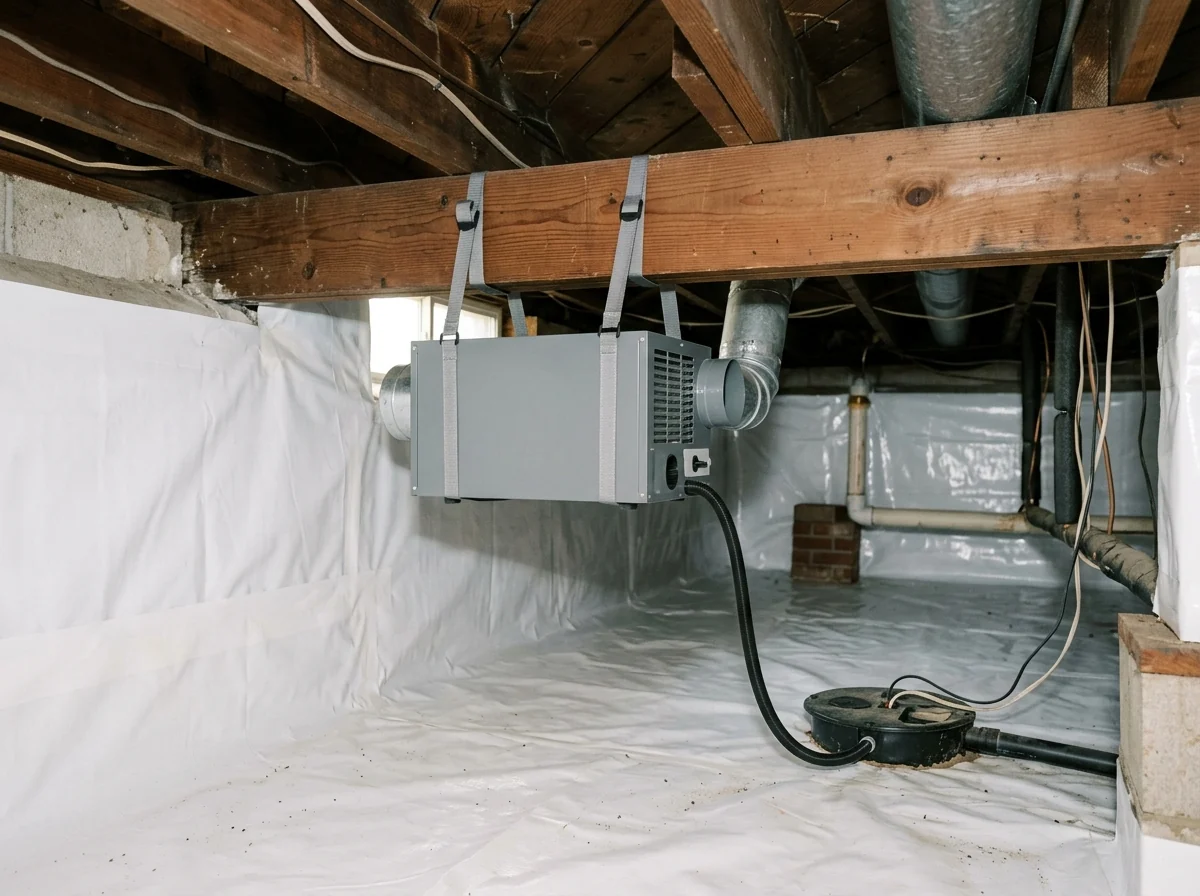
Crawl Space Dehumidifiers
Sealing the vents keeps outdoor air and its moisture out, but soil, concrete and leaks still add water. EPA wants indoor relative humidity under 60%, and between 30 and 50% if you can hold it. A crawl space dehumidifier hangs from the joists or sits on a stand, with its condensate piped to a drain or the sump. HomeGuide puts one at $1,000 to $3,000 installed. One note for Michigan: the 2015 code text that our residential code follows lists exhaust ventilation and conditioned supply air as the ways to condition an unvented crawl space, and doesn't list a dehumidifier. The contractor should confirm what the Building Division will accept.
Vent Sealing and Rim Joist Insulation
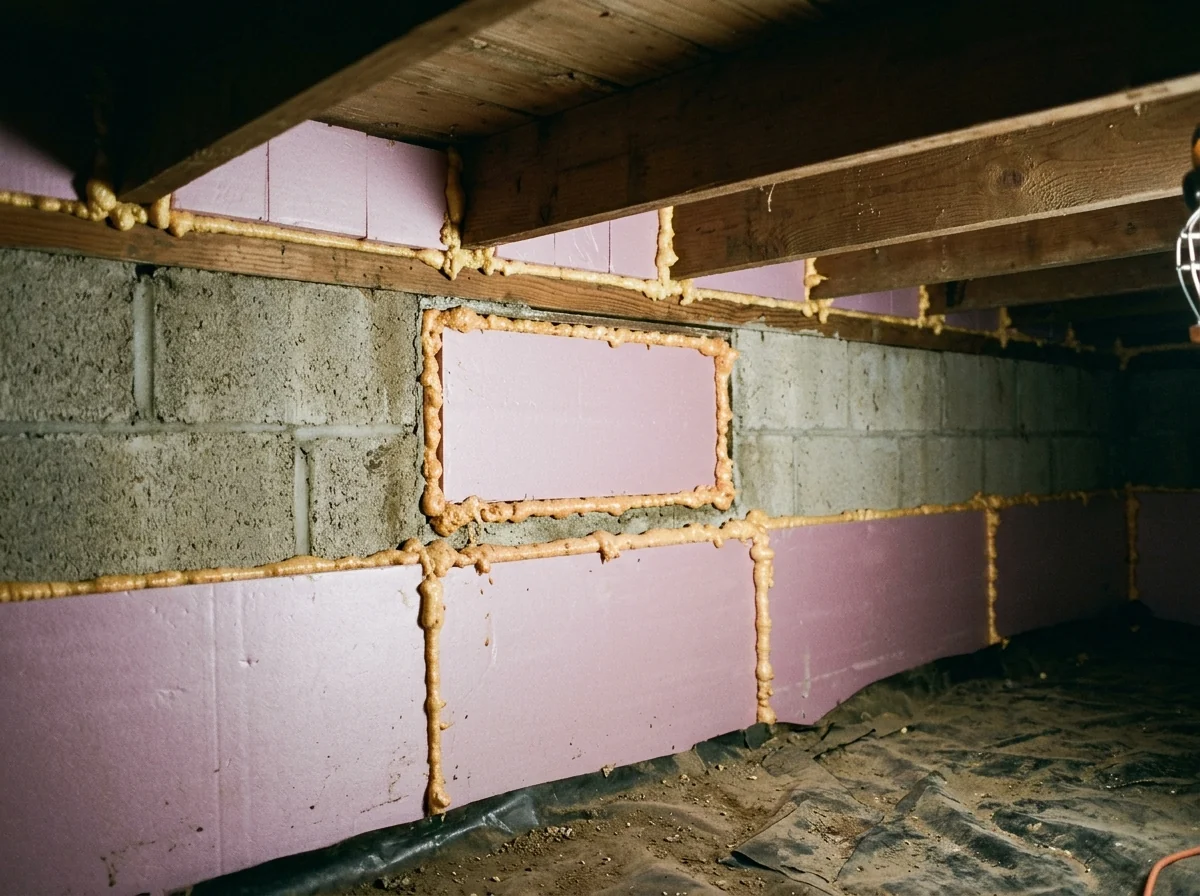
Once the crawl space is sealed, its vents come out of service. DOE's Building America guide cuts rigid foam to fit each vent and seals it in with spray foam or caulk, fastens foam board to the walls with masonry fasteners, gaskets the access door and foams each rim joist bay. DOE notes that in cold climates this protects the floor above and the pipes from the cold. With the walls insulated, the floor between the joists doesn't have to be. HomeGuide puts sealing vents at $150 to $450 and insulation at $500 to $3,700.
Crawl Space Drainage and Sump
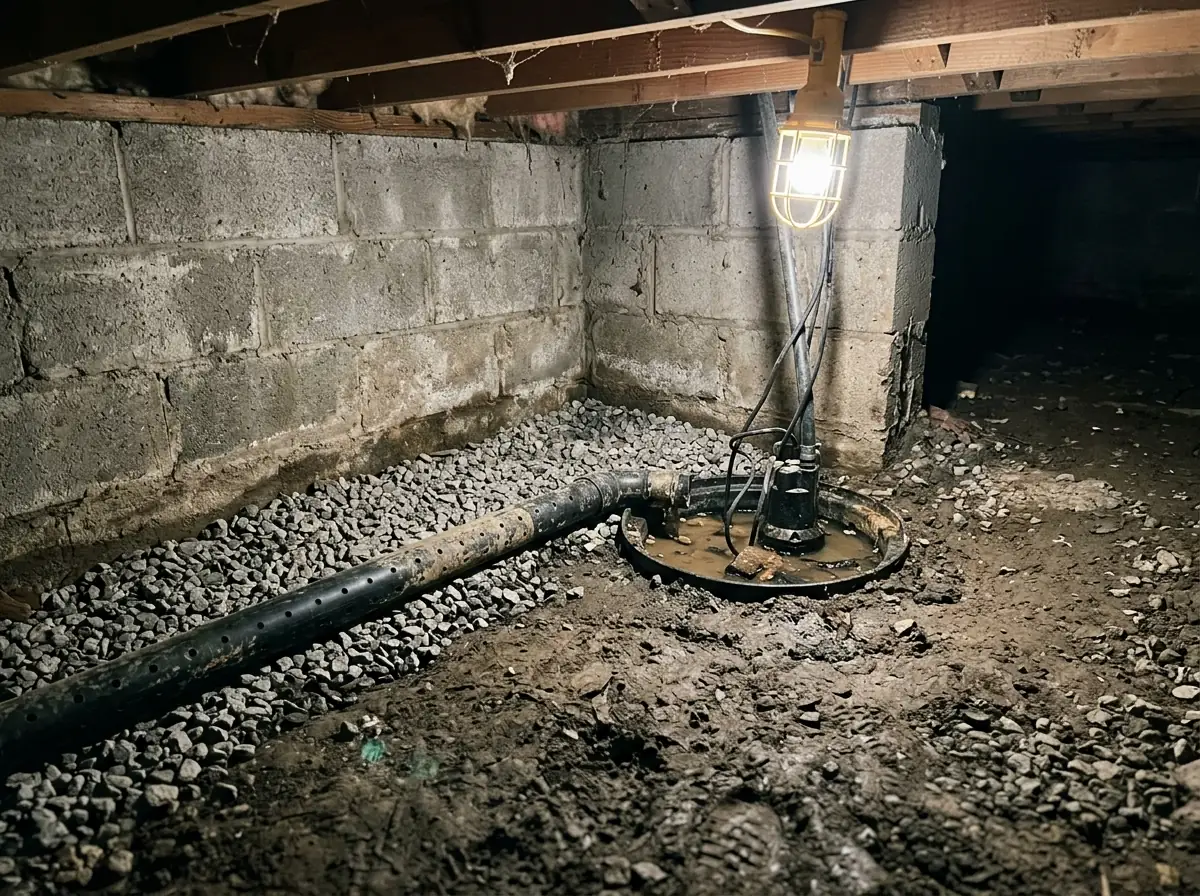
If water stands on the floor after rain, a liner will only float on it. A shallow perimeter drain in gravel carries water to a small sump, and the pump sends it out. HomeGuide puts an interior crawl space drain with a pump at $800 to $3,000. The code is strict here: where groundwater can rise to within 6 inches of the crawl space floor, or surface water doesn't drain from the lot, the inside grade has to be as high as the outside grade unless an approved drainage system is installed. The sump pump installation rules for pit size and discharge apply to this pit too.
Why Farmington Hills homeowners call Farmington Hills Waterproofing
- Free in-home inspection
- Written scope and price before work starts
- Cause found before a fix is quoted
- One local waterproofing contractor, not a call list
- No charge to homeowners for the referral
Vented or Sealed: What the Code Allows
Michigan builds to the 2015 Michigan Residential Code, based on the 2015 IRC. It accepts both kinds of crawl space, and the choice changes what the space needs:
Vented, bare ground
At least 1 square foot of vent per 150 square feet of floor, with one vent within 3 feet of each corner.Vented, with a Class 1 liner
The vent area drops to 1 square foot per 1,500 square feet, a tenth as much.Sealed (unvented)
No vents, a sealed liner as above, and exhaust or supply air at 1 cfm per 50 square feet of floor.Access
Either way, at least 18 by 24 inches through the floor or 16 by 24 through the wall, so the liner and any dehumidifier can be reached.
A liner alone in a vented crawl space is the cheapest step and still code-compliant, but it leaves outdoor air coming in. Crawl spaces with joist rot, sagging floors or sill damage need crawl space repair first, since the liner has to go in under sound framing.
Crawl Space Encapsulation Cost in Farmington Hills
HomeGuide's January 2026 national data. Michigan has no published breakdown we could find, so read these as a guide, not a quote.
| Item | National range |
|---|---|
| Full encapsulation, per sq ft | $3-$10 (total $3,000-$15,000) |
| 1,000 sq ft crawl space | $3,000-$10,000 |
| 1,500 sq ft crawl space | $4,500-$15,000 |
| Vapor barrier installed | $1,200-$4,000 |
| Liner material, 6-20 mil | $0.30-$0.70 per sq ft |
| Dehumidifier installed | $1,000-$3,000 |
| Vent and hole sealing | $150-$450 |
| Wall or rim insulation | $500-$3,700 |
| Interior drain with pump | $800-$3,000 |
Standing water, mold or rotted wood get fixed before the liner, and they're priced separately.