
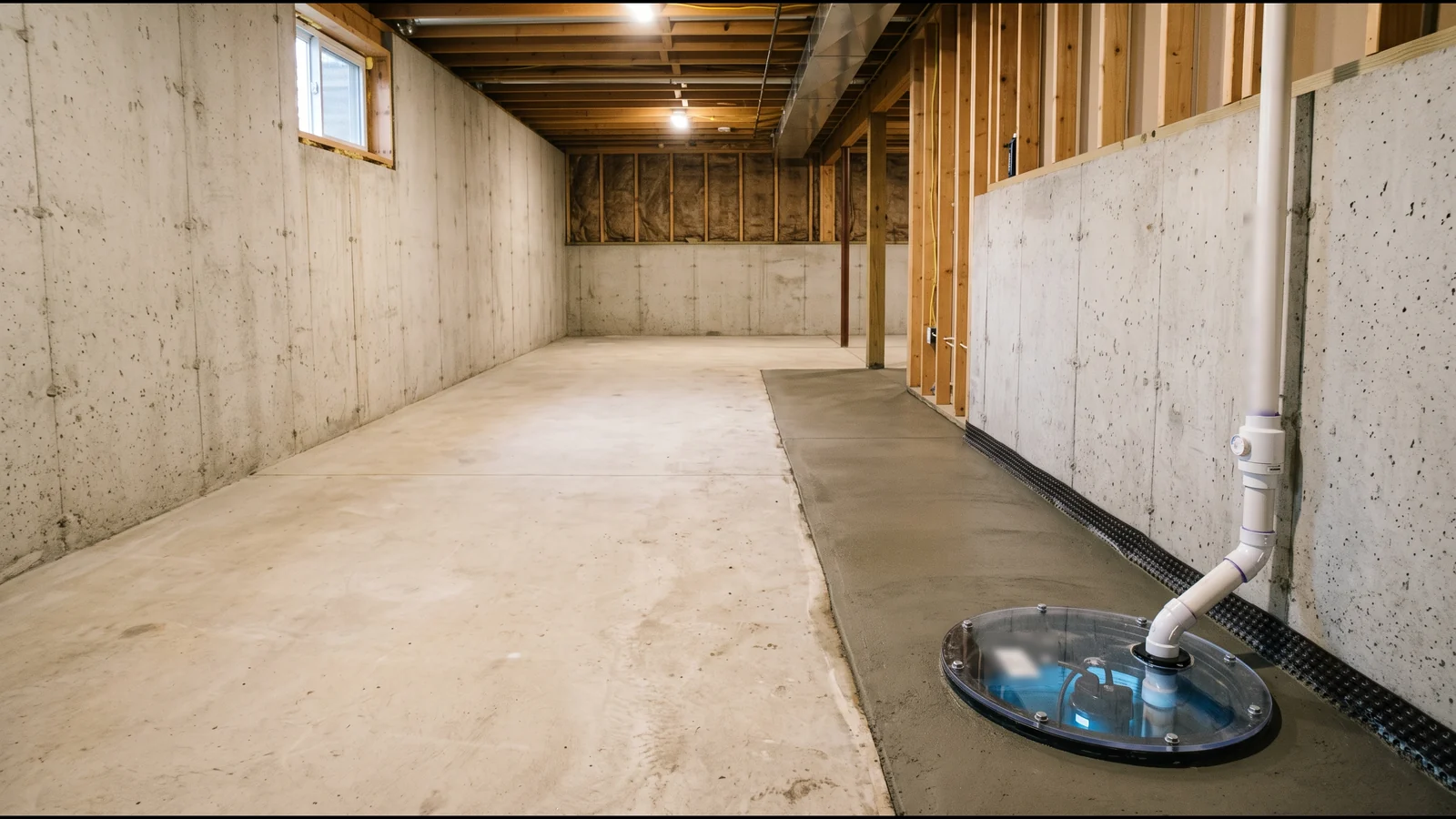
Types of French Drain Installation
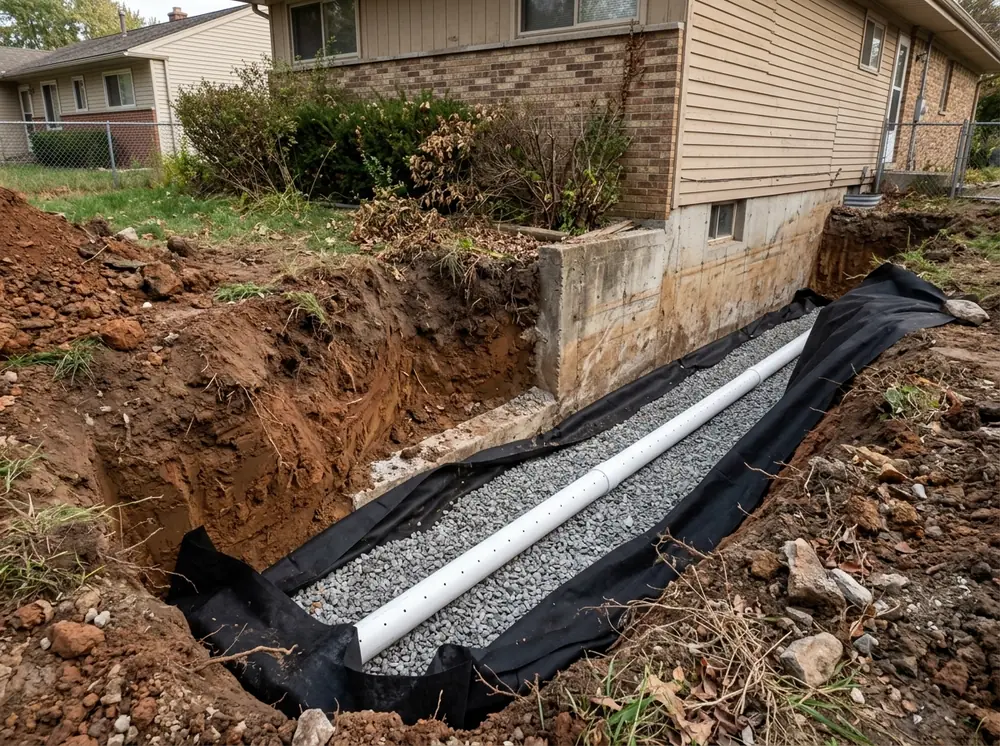
Exterior Footing French Drains
A footing drain, also called weeping tile or drain tile, runs along the outside of the footing at the bottom of the basement wall. It's the drain the residential code expects around every concrete or block basement: perforated pipe on at least 2 inches of washed gravel, covered by at least 6 inches more, emptied by gravity or a pump. On a house where the original tile has silted up or collapsed, a new one means digging to the footing, at least 42 inches down in Michigan. We'd use rigid PVC rather than corrugated pipe here; HomeGuide's guide points the same way, because PVC is more durable and takes a plumber's snake. With the wall dug open, it's also the time to add a membrane, covered under exterior basement waterproofing.
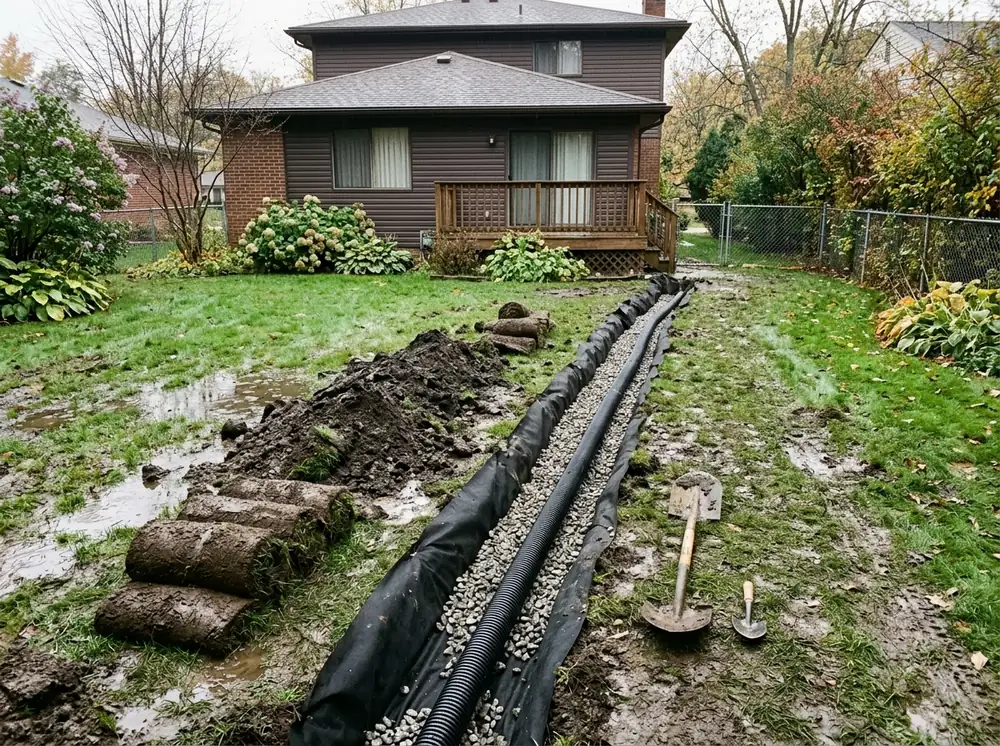
Yard French Drains
A yard drain catches water that soaks a lawn and stays there. HomeGuide's guide puts a typical one 12 to 24 inches deep, at least 12 inches wide and 2 to 5 feet from the foundation. On clay the soil gives water up slowly, so the trench does its work by giving water an easier path than the ground around it. Corrugated pipe is fine at this depth and bends around beds. If the wet spot is surface runoff rather than saturated soil, grading or a catch basin may fix it more cheaply, which is what yard drainage covers.
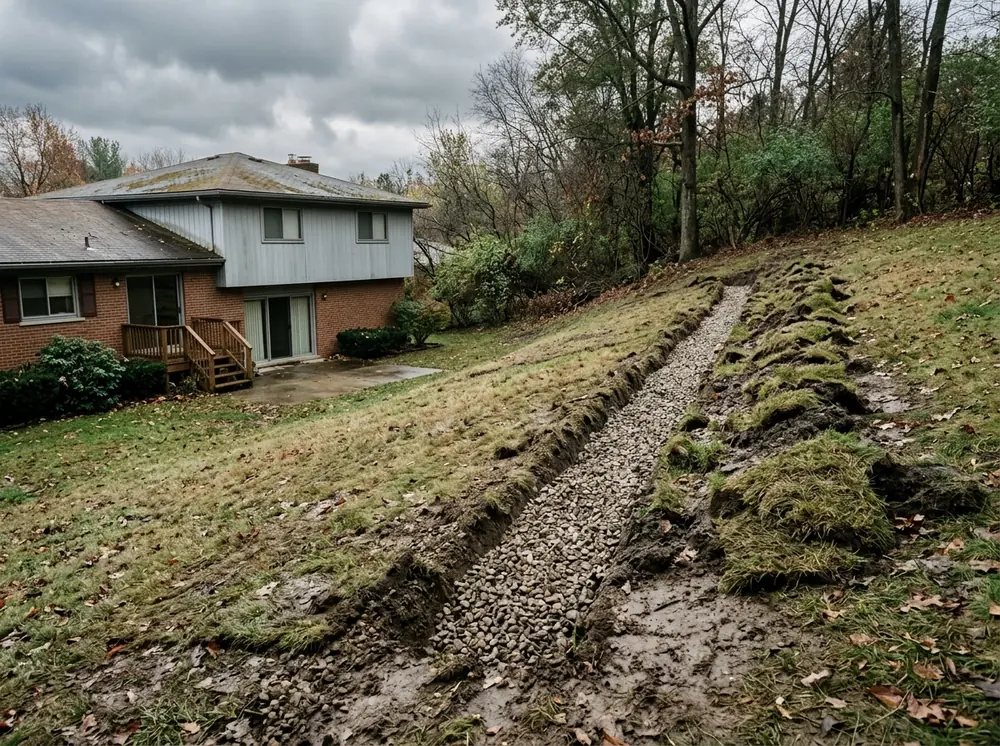
Curtain Drains
A curtain drain is the same build placed across a slope, uphill of the house, to cut off water moving through the soil before it reaches the foundation. HomeGuide describes it as 2 feet or deeper, mostly carrying groundwater, and usually covered with sod so it disappears into the lawn. It suits a house at the bottom of a rise or below a neighbor's yard, where water arrives sideways through the ground rather than from the roof.
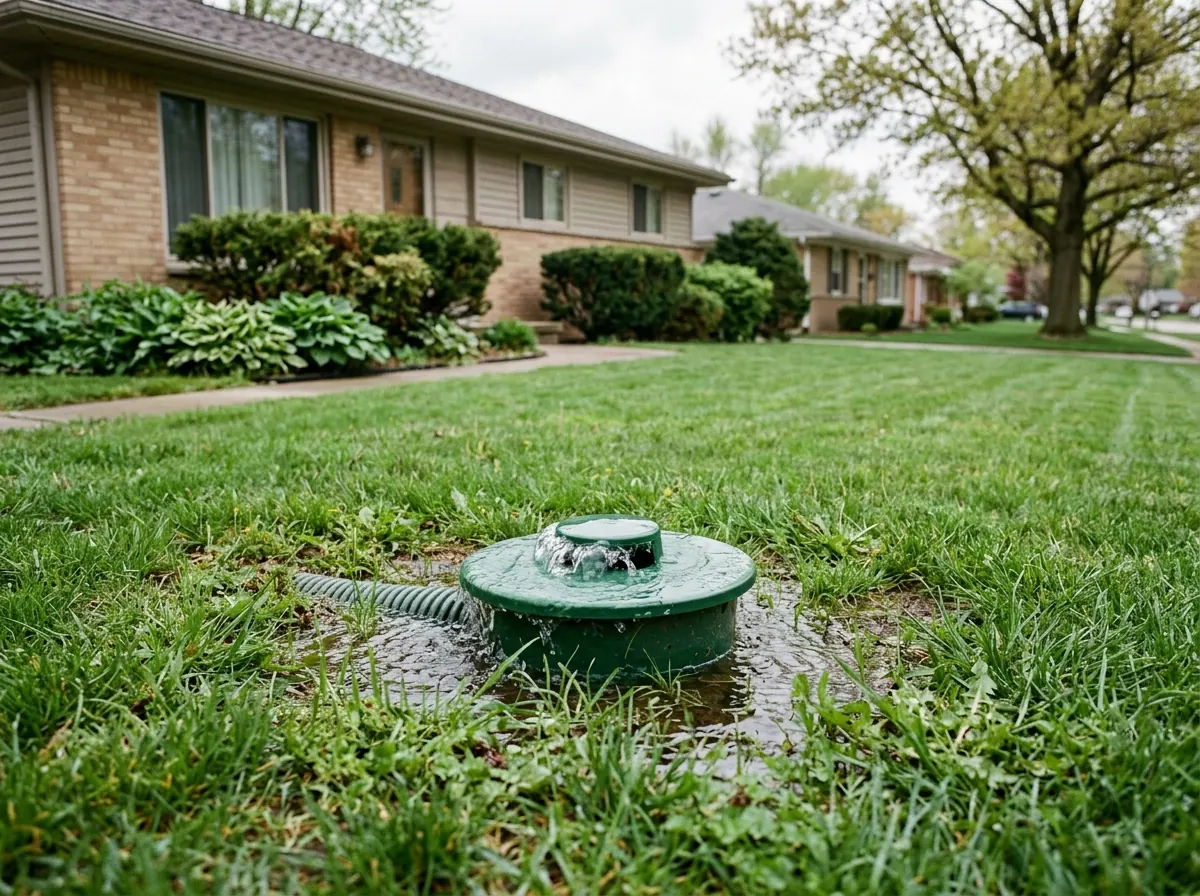
French Drain Outlets: Daylight, Dry Well or Pop-Up Emitter
The three common outlets are daylight (the pipe exits on a lower part of the lot), a dry well (a buried gravel pit or tank that lets water soak in), and a pop-up emitter, a lawn fitting that opens under pressure. Code lets subsoil drains end at a sump, a dry well or an approved spot above ground. A dry well needs soil that drains, which slow clay often doesn't, so the contractor should test before relying on one. HomeGuide puts a perc test at $600 to $2,000.
Why Farmington Hills homeowners call Farmington Hills Waterproofing
- Free in-home inspection
- Written scope and price before work starts
- Cause found before a fix is quoted
- One local waterproofing contractor, not a call list
- No charge to homeowners for the referral
How a French Drain Is Built
These are the details to look for in the quote. A drain that skips one of them can silt up or hold water.
Slope
At least 1% the whole length, a foot of fall per 100 feet, with no dips that hold water.Fabric
Non-woven geotextile lining the trench and folded over the gravel. A sock on the pipe alone leaves the gravel open to silt.Gravel
Washed stone, 2 to 3 inches under the pipe and 3 to 4 over it in a yard drain. Code asks 2 under and 6 over at a footing.Pipe
At least 4 inches. Corrugated for shallow, curving runs; rigid PVC such as SDR 35 for deep footing drains.Cleanouts
An access point so the line can be snaked or flushed later.Outlet
Lower ground, a dry well, a sump or a storm drain, decided before the trench is dug.
Where the Water Can Go in Farmington Hills
City ordinance makes it unlawful to send groundwater, roof water or surface water into the sanitary sewer. The legal outlets for footing drain water are the storm sewer and the ground surface. On the surface, the outlet has to sit at least 4 feet from the foundation, can't send water over a neighboring parcel, and stays out of the street right-of-way and the 20 feet beside it. The city's grading rule asks for a 5% slope away from the house for the first 10 feet, so a drain that dumps water next to the foundation is working against it. Before any trench, the contractor calls MISS DIG 811 at least three business days ahead, and digs by hand within 4 feet of the marks.
French Drain Cost and Lifespan
All figures are HomeGuide national ranges from February 2026; we couldn't find a Michigan breakdown.
| Drain | Per linear foot | Typical total |
|---|---|---|
| Yard or curtain drain | $10-$35 | $1,500-$8,800 (curtain) |
| Exterior footing drain | $30-$90 | $1,200-$4,500 per side |
| Dry well outlet | n/a | $50-$3,000+ |
| Permit | n/a | $100-$375 |
In HomeGuide's estimate, a well-built French drain lasts 30 to 40 years or more. Soils with iron ochre clog drain lines faster and need cleaning more often, at $80 to $500 or more a visit.