
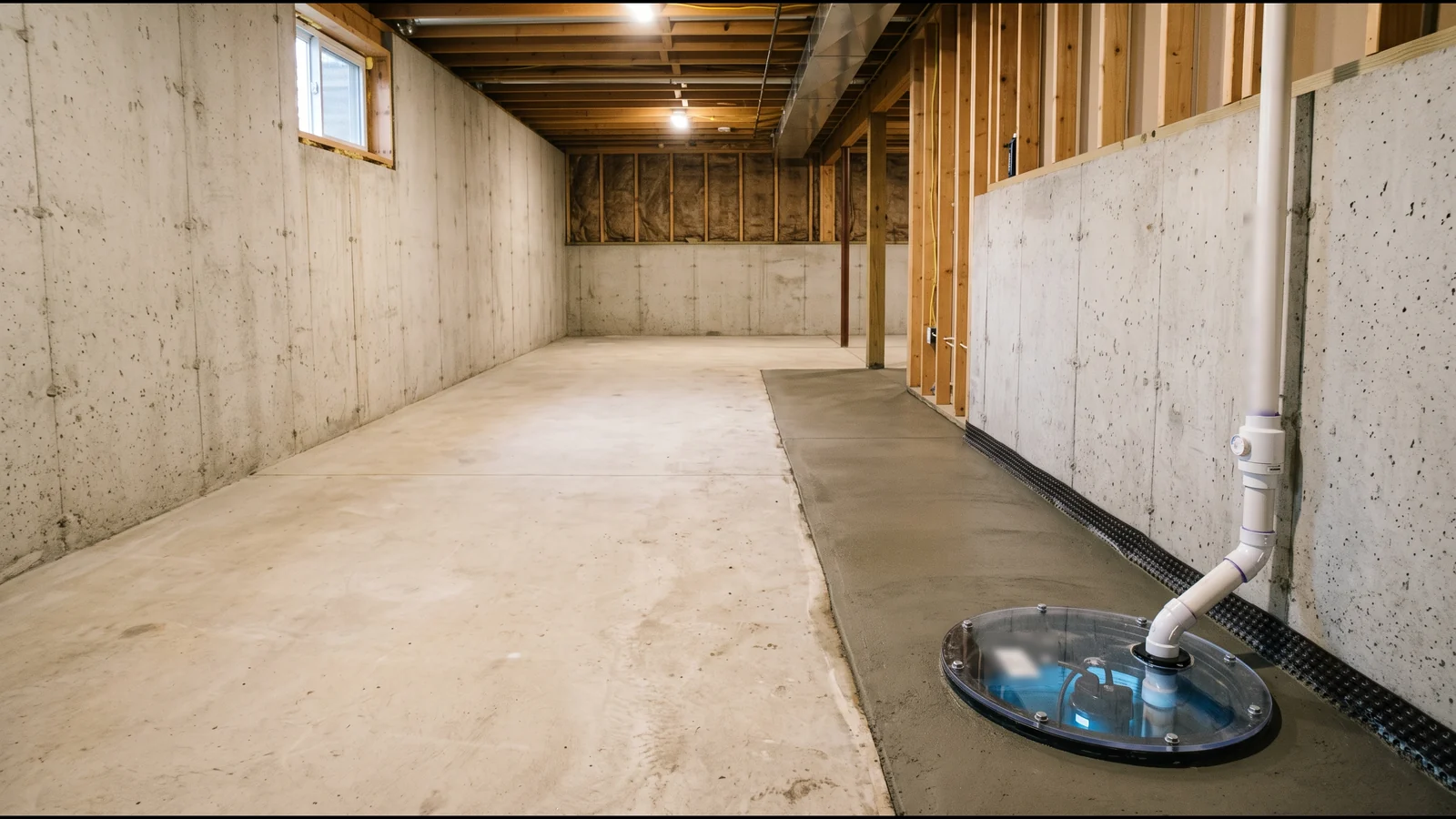
Exterior Basement Waterproofing Systems
A full exterior job usually combines the first three of these. The last three are an alternative and two special cases.
Excavation and Membrane
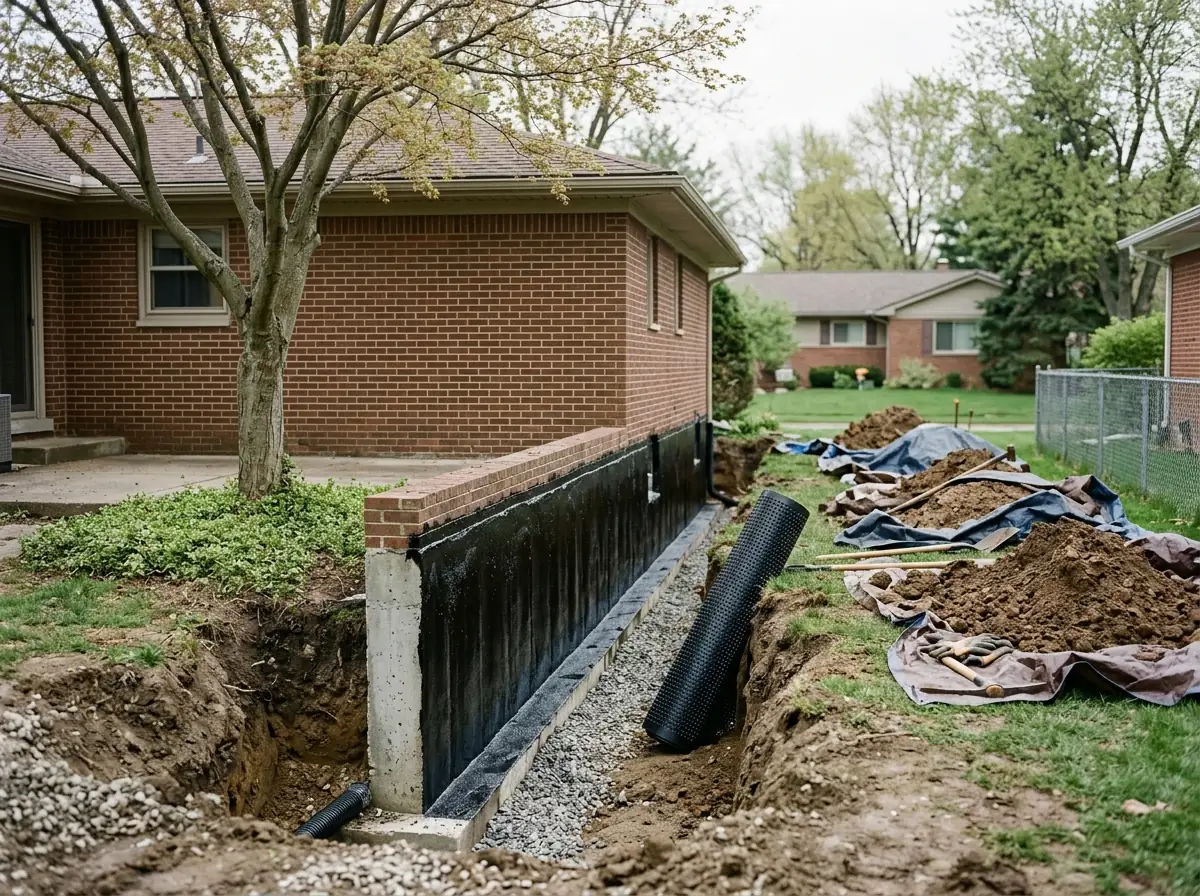
The crew digs down to the footing, scrapes and washes the wall, and patches holes and cracks. Then the membrane goes on. Peel-and-stick rubberized asphalt sheets and spray or roll-on polymer-modified asphalt are the common ones. The 2015 IRC lists the waterproofing materials it accepts. Besides 40-mil polymer-modified asphalt and 60-mil flexible polymer cement, it allows 6-mil PVC or polyethylene, a 1/8-inch fiber-reinforced cement coating and 60-mil solvent-free liquid rubber, and it wants every membrane joint lapped and sealed. Ask which product is on your estimate and at what thickness.
Dimple Drainage Board
A sheet of dimpled plastic, laid over the membrane with the dimples against the wall, does two jobs. It shields the membrane from stones in the backfill, and it leaves an air gap so water that reaches the wall drops straight to the footing drain instead of sitting against it. Without it, wet clay backfill keeps the membrane under pressure year-round.
Exterior Footing Drain Tile
The membrane needs somewhere for water to go, so a perforated pipe in washed gravel goes in beside the footing. The code calls for the gravel to reach at least a foot past the footing's edge and 6 inches above its top, wrapped in filter fabric. The pipe runs to a sump or to daylight. When the tile is the main job and the wall coating isn't, see French drain installation in Farmington Hills.
Bentonite Clay Injection (No-Dig)
Bentonite is a clay that swells when it gets wet. In a no-dig treatment, a slurry of it is pumped through pipes driven into the soil along the wall. The idea is that it fills voids against the foundation and swells into a wet seal. It saves a driveway, patio or deck from being torn up. You can't see the result, though, and it doesn't add a footing drain, so we'd ask the contractor how they check coverage and what they do if a spot keeps leaking.
Poured vs Block Wall Details
Poured concrete takes the coating directly once it's clean and patched. Block is different. The 2015 IRC wants at least 3/8 inch of portland cement parging on the outside of a masonry wall before it's dampproofed. Hollow cores also carry water sideways, so a leak inside can enter several feet from where it shows. On block the contractor also checks for bowing before backfill goes back, because a wet block wall that's moving needs bowing basement wall repair as well.
New-Construction Foundation Waterproofing
On a new house or addition the wall is already exposed, so it's the cheapest time to do this. The code minimum is dampproofing, a coating that slows vapor and light moisture. The code steps up to full waterproofing only where the lot is known to have a high water table or similarly bad soil-water conditions. Capac soil, mapped in Farmington Hills, holds a seasonal water table 0.5 to 1.5 feet below the surface at some point between September and May, per its NRCS description. On a lot like that, we think a builder should price waterproofing even where the inspector would accept dampproofing.
Why Farmington Hills homeowners call Farmington Hills Waterproofing
- Free in-home inspection
- Written scope and price before work starts
- Cause found before a fix is quoted
- One local waterproofing contractor, not a call list
- No charge to homeowners for the referral
How an Exterior Waterproofing Job Goes
- 1
MISS DIG and Layout
Utility marking through MISS DIG 811 is free and required by state law, with three business days' notice. Once the marks are down, the dig has to begin within 14 days, and anything within 4 feet of a mark is dug by hand.
- 2
Excavation to the Footing
Michigan's code puts exterior footings at least 42 inches below grade, so the trench goes at least that deep and often deeper. Shrubs, AC units and walks along the wall come out first.
- 3
Check the Layers Before They're Covered
Once backfill goes in, nobody sees the wall again. If you can, look at the membrane and its laps, and the drainage board, while the trench is still open.
- 4
Drain, Backfill and Grade
Tile in gravel at the footing, then backfill that drains. The ground is finished to fall away from the wall. Under the code that's a 6-inch drop over the first 10 feet; the city ordinance sets a 5% slope.
Exterior Waterproofing Cost and Lifespan
We haven't found Michigan-specific prices, so these are HomeGuide's national figures.
| Item | National range | HomeGuide date |
|---|---|---|
| Exterior waterproofing, whole job | $10,000 to $18,000 | Jan 2026 |
| Liquid or sheet membrane | $4 to $7 per sq ft installed | Jan 2026 |
| Footing drain (perimeter tile), outside | $30 to $90 per linear foot | Feb 2026 |
| Regrading | $1,000 to $5,000 | Jan 2026 |
Ask whether the price includes drainage board and new tile or just the coating. Price also follows depth and access: a wall beside a driveway or under a deck costs more to open than one under lawn.